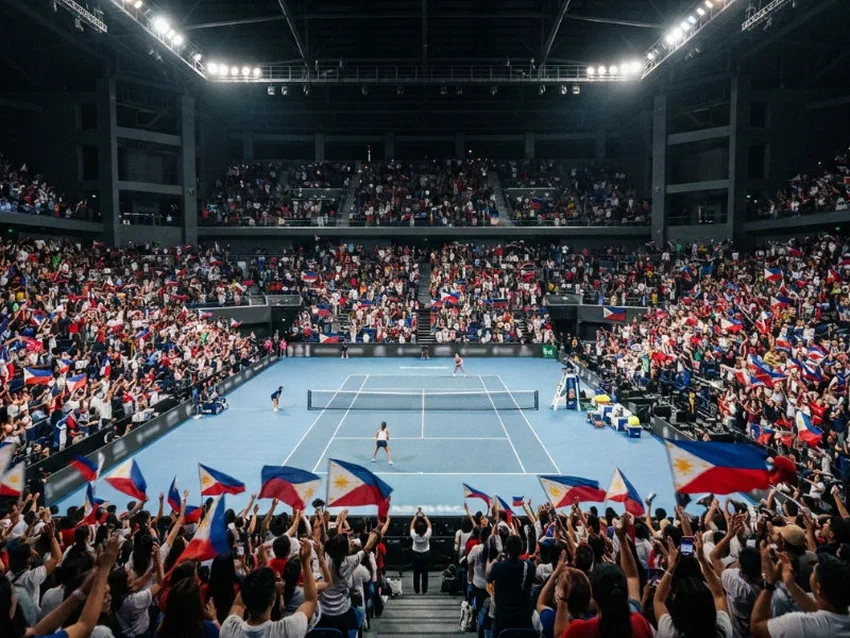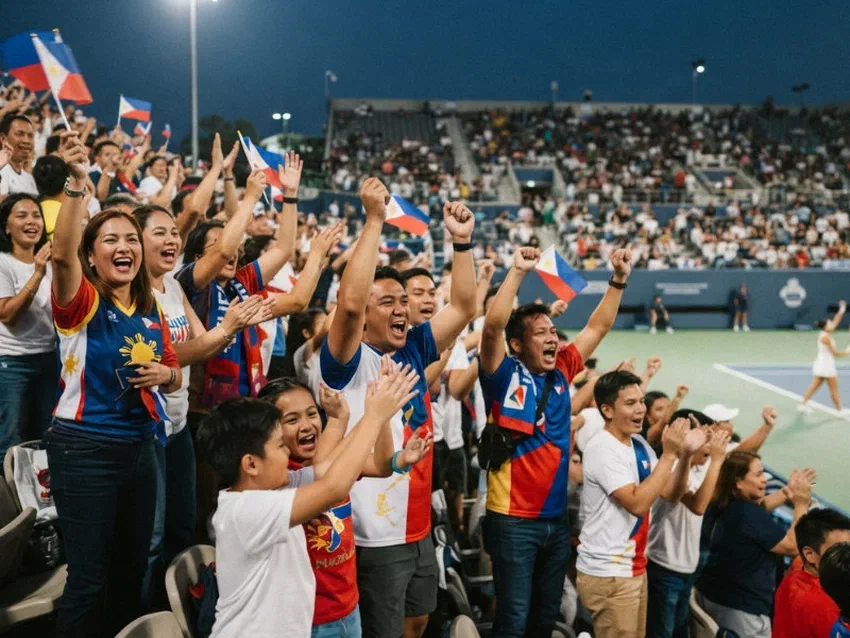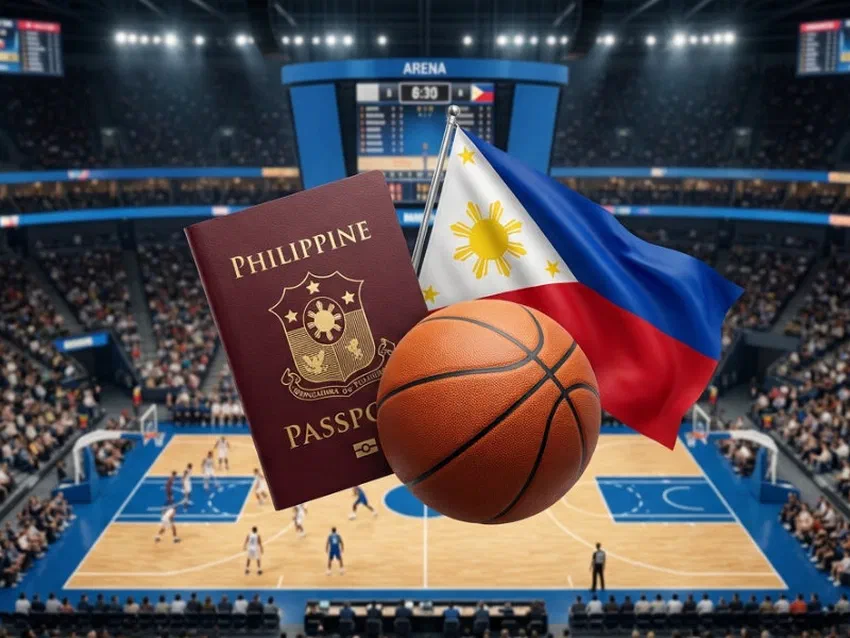
I’m glad we still care about Gilas. A full Philippine Arena on a World Cup night is not nothing. Thirty-eight thousand people showed up because the home team was on the floor. That noise still gets me.
Filipinos do not treat basketball like a side hobby. Barangay courts fill up on Sundays. UAAP and PBA games travel group chats. Kids grow up saying they want to play like Robert Jaworski or June Mar Fajardo. Plenty also want the NBA - Jordan Clarkson in the league, Kai Sotto still chasing it. That dream can pave the way for the next Pinoy. It is not the same ladder as Gilas.
For Gilas on the world stage, the target is FIBA - a World Cup berth and a return to the Olympics. We still rank ourselves against the rest of Asia even when the honest answer hurts. Best in the region is the dream. It has been for decades.
I’m also glad someone finally said what fans already know. FIBA naturalization has gone too far. This breakdown makes the case well:
Naturalization is not the program for Gilas. I am not calling for a ban on every import.
Marcus Douthit and Andray Blatche helped us reach two World Cups. Justin Brownlee nearly got us to the 2024 Olympics. I am glad for those nights.
The problem is what we reach for next. FIBA gives every team the same one naturalized slot - Japan, Korea, Lebanon, and Australia included. It does not separate you in FIBA Asia qualifying. No Olympics since 1972. Australia is in our qualifying group now.
In this piece: Every naturalized player · World Cup and Olympic qualifying · Oceania merge · Pinoys abroad
What FIBA Actually Allows
FIBA does not hand out passports. A country’s government does. FIBA just leaves one roster spot for a player who got citizenship late and has no real ties before age 18.
That is the slot the Samahang Basketbol ng Pilipinas (SBP) keeps filling. One import big. One hope that height fixes what the pipeline did not.
Strip away the paperwork. Naturalization is simpler than that. It is a player’s commitment under a flag. Not a skill sheet. Not a congressional bill. It is a promise to stand for this country when the FIBA window opens. That is what fans think they are buying. Too often the federation rents a player and hopes the commitment shows up too.
Filipino-heritage players who got a passport before 16 can count as locals. Miss that window and FIBA treats you like an import anyway. That is why Jordan Clarkson and Christian Standhardinger still use the naturalized slot even when fans treat them as “ours.”
That is a different story from hired PBA imports. Clarkson and Standhardinger grew up with Filipino ties. I am not grouping them with Blatche or the passport-bill cycle for imports. This piece is about speeding up hired stars when the player path is thin. It is not about heritage players fans already claim.
Back in 1985, the rule was looser. FIBA let two naturalized players. The Philippines used both and won FIBA Asia in Kuala Lumpur. After that era, the federation mostly stopped until Smart Gilas started hunting again in 2009.
Every Naturalized Player in Philippine Men’s Basketball History
This is the full list as I can trace it. Who got citizenship. Who only tried out. Who actually wore the flag in a FIBA event.
1985 Champions (Two Naturalized Slots)
| Player | Origin | Role | Notes |
|---|---|---|---|
| Jeff Moore | United States | Played | Naturalized big on the 1985 ABC title team in Kuala Lumpur |
| Dennis Still | United States | Played | Second naturalized slot on the same team |
| Chip Engelland | United States | Ready, did not play | Would have been a third import; two-slot limit kept him off the roster. Later became an NBA shooting coach with the San Antonio Spurs |
Moore and Still helped the Philippines beat South Korea and China for the title. The team gave up its 1986 World Cup spot for political reasons and was disbanded. The naturalized experiment ended there for decades.
Smart Gilas / Gilas Pilipinas Era (2009 Onward)
Candidates who never became Filipino citizens for Gilas
| Player | Years linked | Outcome |
|---|---|---|
| CJ Giles | 2009 | Smart Gilas import candidate. Strong in the 2009 FIBA Asia Champions Cup, brief PBA stint, left after clashes with coach Rajko Toroman. Later played for Bahrain |
| Jamal Sampson | 2009-2010 | NBA veteran tryout. Knee issues and friction with Toroman and Noli Eala. Gone quickly |
| Dwayne Jones | 2010 | Invited as a candidate, signed with the Phoenix Suns instead. Returned later as a PBA import only |
| Milan Vucicevic | 2010 | Serbian center. Hit a buzzer-beater at the 2010 FIBA Asia Champions Cup, team finished seventh, program moved on |
| JaVale McGee | 2012 | Public interest and a House bill filed. Lost the spot to Andray Blatche |
| Isaiah Austin | 2017 | Dominant for Chooks-to-Go at the FIBA Asia Champions Cup. Naturalization talk went nowhere |
| Greg Smith | 2017-2019 | PBA import who trained with Gilas. Owner pushed for naturalization. Never completed |
Naturalized citizens who played for the men’s national team
| Player | Citizenship | FIBA role | Highlights |
|---|---|---|---|
| Marcus Douthit | 2011 (RA 10148) | Naturalized center | Smart Gilas anchor. 2013 FIBA Asia silver and the 2014 World Cup berth. Gold at 2012 Jones Cup and SEA Games. Last Gilas run 2014 Asian Games |
| Andray Blatche | 2014 (RA 10636) | Naturalized center | 2014 World Cup win over Senegal (first in 40 years). 2015 FIBA Asia silver. 2019 World Cup without a win. 2018 Australia brawl suspension |
| Christian Standhardinger | Filipino heritage; passport after 16 | FIBA naturalized slot | 2017 FIBA Asia Cup when Blatche was unavailable. Born in Germany to a Filipina mother |
| Jordan Clarkson | Filipino citizenship granted | FIBA naturalized slot | 2018 Asian Games silver. NBA star, still counts as the import slot in FIBA windows |
| Angelo Kouame | 2021 (RA 11543) | Naturalized center | Ateneo and UAAP product from Côte d’Ivoire. Part of the post-Blatche pool |
| Justin Brownlee | 2023 (RA 11937) | Naturalized forward | Three-time PBA Best Import. Face of recent Gilas windows when healthy |
| Malick Diouf | 2026 (RA 12318) | Naturalized big (3x3 pool, 5-on-5 option) | UP and UAAP MVP from Senegal. Newest passport in the pipeline |
Recently naturalized or still in the queue
| Player | Status | Notes |
|---|---|---|
| Bennie Boatwright | Bill passed House/Senate; awaited signature mid-2026 | PBA import pitched as the next big |
| Chris McCullough | Discussed publicly | San Miguel import named as a possible candidate alongside Brownlee in 2020 reporting |
Women’s program: Elizabeth Means (RA 12319, 2026) was naturalized for Gilas women and 3x3. She is not on the men’s list above. It shows the same shortcut spreading to women too.
How We Reached the World Cup and the Olympics
We chase two prizes. A FIBA World Cup spot and a return to the Olympics. Those are the world stages FIBA actually gives a national team. The World Cup is the more reachable target - we qualified competitively in 2014 and 2019, and co-hosted 2023. The Olympics is the bigger dream and the harder ask. FIBA only sends a handful of teams from our part of the world.
Our last Olympic game was 1972 in Munich. That is more than fifty years of waiting. The country kept believing anyway.
Below is how we got in when we did. I skip 2023. We co-hosted and qualified automatically. I also note which naturalized players were on those runs. I note who blocked us when we fell short.
FIBA World Cup - How We Qualified (Competitive Paths)
| World Cup | How we qualified | Naturalized player on the run? |
|---|---|---|
| 1954, 1959 | Early-era direct entries | None |
| 1974 | Won 1973 ABC in Manila (10-0, beat Korea in the final) | None - all homegrown |
| 2014 | 2013 FIBA Asia silver in Manila - beat South Korea 86-79 in the semis; top three went to Spain | Marcus Douthit - anchor all tournament |
| 2019 | FIBA Asia-Pacific qualifiers - 7-5, best fourth in Asia (squeaked in on the last window) | Andray Blatche - naturalized slot through the quali cycle |
Near-miss with naturalized help: Jeff Moore and Dennis Still won 1985 FIBA Asia in Kuala Lumpur. That earned a 1986 World Cup berth. The federation gave up the slot for political reasons. Imports won Asia. We never played in Spain.
Not a competitive quali: 2023 co-host auto bid (Manila) - excluded here on purpose.
Olympics - How We Tried to Get Back
| Cycle | Path | Naturalized player | Result |
|---|---|---|---|
| 1972 Munich (last time we played) | 1971 ABC silver in Japan - top two went to Olympics | None | Qualified - finished 13th in Munich |
| 2012 London | 2011 FIBA Asia - needed top three | Marcus Douthit | Missed - Jordan beat us in the semis; South Korea 70-68 in the third-place game |
| 2016 Rio | 2016 FIBA OQT in Manila - winner takes Olympic spot | Andray Blatche (Jordan Clarkson ruled out; SBP picked Blatche) | Missed - 0-2 vs France and New Zealand |
| 2021 Tokyo | 2021 FIBA OQT in Belgrade (invited after New Zealand withdrew) | Angelo Kouame | Missed - lost to Serbia and Dominican Republic |
| 2024 Paris | 2024 FIBA OQT in Latvia - winner takes Olympic spot | Justin Brownlee - All-Star Five, led run to semis | Missed - lost to Brazil in the semis |
Douthit and Blatche genuinely helped us reach the World Cup. Douthit, Blatche, Kouame, and Brownlee all carried Olympic bids. None got us back to the Games.
Brownlee came closest in 2024. We were two wins shy after a fifty-two-year wait. We still did not qualify.
That is the gap between a shortcut that fixes one tournament and a program that ends the Olympic wait.
Who Blocked Us in FIBA Asia (World Cup and Olympic Paths)
| When we missed | Tournament | Who stopped us |
|---|---|---|
| 2010 World Cup | 2009 FIBA Asia QF | Jordan 81-70 (also beat us in 2007 QF) |
| 2012 Olympics | 2011 FIBA Asia | Jordan semis; South Korea third-place game |
| 2019 World Cup quali (still qualified) | 2018-19 Asian qualifiers | Australia twice in round 1; Iran twice at MOA - we still scraped in as best fourth |
| 2027 World Cup (ongoing, as of August 2026) | 2027 Asian qualifiers Group E | Australia 7-0 in second round (clinched); New Zealand, Iran, Jordan ahead of us |
The names rotate.
Jordan and Korea ended runs in 2009 and 2011.
Iran and Australia hurt us in the 2019 quali windows.
Australia and New Zealand sit above us again now.
Naturalization did not remove any of them.
The Oceania Merge - Same Spots, Harder Neighbors
Before 2019, Australia and New Zealand qualified through Oceania. It was mostly a two-team playoff between themselves.
FIBA Asia teams fought other Asians for World Cup spots. They did not meet the Boomers in a qualifying group.
FIBA merged the zones starting with the 2019 World Cup cycle.
Seven competitive spots still go to the combined Asia-Pacific region. A host takes one when named. China in 2019. Qatar in 2027.
The spot count did not grow. The schedule did.
We now play Australia and New Zealand home and away in the same standings as Iran, Korea, and Jordan.
That is a different problem than adding one naturalized big.
Australia went 10-2 in the 2019 second round and 11-1 in 2023.
New Zealand took a 2023 spot too.
In the current 2027 cycle, Australia is already through. They are 7-0 in second-round Group E. Gilas sits 2-4 in the same group.
Chasing “best in Asia” on the court now means beating Olympic-medal talent with a steady export path - Japan, the NBA, somewhere that sharpens locals. Not one naturalized big and a thin roster behind him.
That is not the same as topping the old Asian-only table on paper.
Who has qualified from this merged bracket since it started:
| World Cup cycle | Teams that reached the tournament (competitive quali) | Notes |
|---|---|---|
| 2019 | Australia, Japan, Iran, New Zealand, South Korea, Jordan, Philippines (best fourth, 7-5 with Blatche) | China hosted. We took the last open slot over Lebanon. |
| 2023 | Australia, China, New Zealand, Iran, Jordan | Philippines and Japan co-hosted. Only six competitive slots - Lebanon finished second in its group and still missed. |
| 2027 (ongoing, as of August 2026) | Australia and Lebanon clinched so far; Qatar hosts | Gilas trails New Zealand, Iran, and Jordan in Group E. Several spots still open. |
The pattern is clear. Oceania powers take spots every cycle.
Philippines only got in once in this format. That was 2019 as best fourth.
A naturalized center does not shrink Australia. It does not move New Zealand out of your group.
What the Shortcut Actually Bought Us
I am not pretending the imports did nothing. The summary above already thanked Douthit, Blatche, and Brownlee. This section is the cost.
Since 2009, the SBP has tried more failed candidates than long-term picks. Giles. Sampson. Vucicevic. McGee hype that never landed. Austin. Smith. Each cycle costs time and fan hope.
Blatche showed up out of shape in later windows. The 2019 World Cup went 0-5. The 2023 home World Cup did not change the story. One import slot does not fix youth height, school programs, or a pro league that caps foreign players at one per team.
The YouTube video’s North Macedonia example is the extreme end. Six Americans in twelve months. Six different flags, if you can call that commitment. We are not that bad. We still play the same game. Find the hole. Shop for a passport. Call it progress.
Why a Passport Is Not a Program
Copying other countries is not a plan. Japan, Korea, Lebanon, and Australia can naturalize and still win because their local player path works first. We reach for a passport when the path is thin. That is the mistake.
If naturalization were the fix, Gilas would be ahead by now. We have been hunting imports since Smart Gilas in 2009. The qualifying tables above show the gap. One hired big does not fix weak youth height, a thin frontcourt, or a PBA that develops locals behind one import per team.
That is the sign.
Naturalization is not a competitive edge in FIBA Asia. Japan, Korea, Lebanon, Jordan - they all naturalize. FIBA gives every team one slot.
It fails because we treat it like the program instead of a patch.
FIBA Asia Qualifiers - One Bracket, Harder Road
Gilas does not qualify alone. Australia, New Zealand, Japan, Korea, Lebanon, and Jordan share the same FIBA Asia road. World Cup windows. Asia Cup. Same naturalized-player rule. Oceania merged into Asia for World Cup qualifying starting 2019. That whole bracket counts now. It includes two countries we never had to beat in qualifying before the merge.
FIBA allows one naturalized player per roster. Most teams in that bracket use the slot. Some pair it with homegrown stars. We pair ours with a thin local frontcourt and hope the math works.
| Country / team | Naturalized player (recent) | Notes |
|---|---|---|
| Australia | Bryce Cotton (also Kevin Lisch, Matisse Thybulle) | Boomers pick one per tournament. Cotton debuted in 2025 qualifiers vs Gilas in Perth |
| New Zealand | Casey Frank ( 2006-2014 ); slot often empty lately | Tall Blacks leaned on Frank for years; recent cores use Webster, Fotu, Shea Ili |
| Japan | Josh Hawkinson (also Nick Fazekas before him) | Naturalized bigs beside Yuki Kawamura, Rui Hachimura, Keisei Tominaga |
| South Korea | Ra Gun-ah (Ricardo Ratliffe) | Naturalized since 2018 |
| Jordan | Dar Tucker (after Rondae Hollis-Jefferson) | Swaps the slot when the last import leaves |
| Lebanon | Dedric Lawson; DJ Funderburk incoming | New naturalized bigs on a deep local core |
| Qatar | Brandon Goodwin; Kendrick Nunn pursued | Shopping NBA-level guards for the 2027 cycle |
| Chinese Taipei | Brandon Gilbeck | 7-foot naturalized anchor since 2021 |
| Bahrain | CJ Giles (among others) | Same CJ Giles who tried out for Smart Gilas later played for Bahrain |
That is not a Philippines-only trick. It is FIBA Asia standard - from Manila to Perth to Beirut. Everyone in the bracket gets the same option. A passport does not move you past Australia, Iran, or Jordan in the standings. Knowing that does not tell us what Gilas should do. It only shows the shortcut is not an edge.
Japan does not win because Hawkinson exists. Japan wins because B.League development stacks with Hawkinson and NBA-level local players.
Korea keeps Ra Gun-ah and still builds around Lee Hyunjung. Lebanon adds Lawson on top of Cedars depth.
Australia naturalizes too. They still do not need it to beat us. The Boomers roll out Josh Giddey, Dyson Daniels, Dante Exum, Josh Green, Patty Mills, Jack McVeigh. Naturalization is a bonus pick, not the program. Their NBL feeds the national team. Ours mostly feeds import debates. In 2018, they sent Thon Maker and Lisch in the same qualifying window against Gilas. Maker counted as local. He got citizenship as a teen refugee. Same paperwork games. Different depth behind it.
New Zealand shows the other path in the same bracket. They naturalized Casey Frank for a decade. Then they built toward 2022 FIBA Asia Cup bronze with local guards and forwards. Would that fix Gilas? No. It only stacks on a player path that already works. We keep trying to skip straight to the stack.
We add Brownlee and still ask why the program feels stuck.
Europe and the Rest of the World Too
The video above is not only about Asia.
North Macedonia cycled six naturalized Americans in about a year.
Slovenia hunts a new big every summer for Luka Dončić.
Spain won EuroBasket 2022 with Lorenzo Brown. He is American. He had never played in Spain before he got the passport.
France fast-tracked Joel Embiid, then watched him play for Team USA against France at home.
Italy courted Paolo Banchero for years. He picked Team USA anyway.
The American Player Path - Team USA First, Another Flag Second
The deepest talent pool on earth is American. Team USA only takes twelve. Any U.S. pro with a real shot will try for that roster first.
When the final cut says no, most do not walk away from big tournaments. They look for another door.
FIBA leaves one naturalized slot open on dozens of teams. Bahrain. North Macedonia. Qatar. Philippines. And the rest. A second passport is often a backup plan. World Cup windows. Olympics qualifying. Continental tournaments. Whatever stage still fits their career.
Embiid and Banchero chose Team USA when they could. Good for them. For every star who picks Team USA, there are players who take the first flag that gets them back on a FIBA floor. That is not love of country. That is a career move.
That is why North Macedonia can cycle six Americans in a year. That is why CJ Giles tried Smart Gilas and later played for Bahrain. We are not the only country shopping for a passport.
A passport stop is not a program. Countries that win long-term still grow local players. Their pro leagues export players, not just import them.
What That Means for Gilas
Naturalization was never going to carry us alone. It was sold that way anyway - one big, one bill, one window saved.
A Pinoy in the NBA would lift the whole country. Clarkson already does in stretches. That is not a Gilas program either. You still need twelve who can qualify through FIBA Asia - World Cup windows, Olympic quali, the merged bracket with Australia in it.
Lebanon’s Lawson and Japan’s Hawkinson walk into windows built on years of local investment. We walk in with Brownlee and hope the local players around him grew up fast enough.
That is why I do not want the Philippines to treat naturalization as the plan. A national team is supposed to show what your basketball produces. Not the best hired player you could naturalize before the next window.
FIBA already tightened switching national teams after senior tournaments. Good start. The video argues for something stricter, closer to FIFA residency rules. Live in the country. Do not just sign papers between qualifying windows. I would take that over another emergency import.
Lithuania reportedly shut down rumors about D’Angelo Russell because veterans pushed back. They would rather lose with their own guards than win with a rental. I respect that more than another congressional bill for a PBA import.
The Long Fix Is Not a Passport
Naturalization is the fast lane. You need a big for the next FIBA window. You find a PBA import or an overseas pro. Congress passes a bill. He plays. The crowd cheers. The youth system stays the same. You asked for commitment under the flag. You got a rental with a passport.
The long fix is local talent. Kids who grow through school leagues, UAAP, and a pro system that actually develops them. Not renting a finished product every season. They do not need a bill to prove they belong under the same flag the jersey wears.
That means fixing the PBA, not just the national team photo. One import per team is easy math for owners. It is bad math for growth. Local bigs fight for scraps behind a hired anchor. Guards learn to play around the import, not through a full five-man system built here. A league that treats its own roster like supporting cast will keep sending desperation to Gilas.
It also means loosening the clearance wall when a Pinoy wants an Asian league stint that builds Gilas.
Not only blocking it until he comes home on the league’s terms.
Then it shops for that same import’s passport when the FIBA window opens.
Send Pinoys Abroad as the Import
Here is the other side I wish we talked about more.
Filipinos already leave for Japan, Korea, and other Asian leagues.
Kiefer Ravena, Thirdy Ravena, Robert Bolick, and Kai Sotto are names fans already track.
Sotto is the clearest recent bet on the NBA chase from here. In those leagues a Pinoy is often the Asian import or the reinforcement. They are not the local fighting for minutes behind someone else’s hired star.
The PBA Is Strict When Pinoys Leave for Asia
The PBA does not make that path easy. A player on a live Uniform Players Contract is bound to his mother team and the league. He cannot join Japan B.League or KBL clubs without clearance.
The usual chain runs like this. The foreign league writes to SBP. SBP asks the PBA when the player has a live deal. The PBA checks with the mother team. The Board of Governors decides. FIBA licensing follows the same clearance line.
You still need SBP even if you never signed with the PBA.
Skip the draft. Leave UAAP or college. You are not free to sign in Japan on your own.
FIBA treats SBP as the home federation for every Filipino pro. A foreign club cannot register you without a FIBA letter of clearance. That request lands on SBP. The federation checks whether you owe a live deal in the Philippines. A PBA contract. Another pro league. Or nothing on paper at all.
Why does SBP still gate it?
FIBA rules first. The member federation for the Philippines must confirm you are free to transfer. No SBP reply, no legal stint abroad on FIBA books.
Gilas comes second. SBP runs the national program. It needs to know where its players are licensed. It needs them reachable for FIBA windows.
Domestic order comes third. The PBA is not the only watcher. SBP still speaks for Philippine basketball when a Pinoy signs abroad.
Thirdy Ravena took that path. He skipped the PBA draft and went to Japan from UAAP. He did not need a PBA team release. He still went through SBP and FIBA. Al Panlilio said he had no team or league hook. Different circumstances from Kiefer. Still federation business. Still a Gilas conversation before he left.
Kiefer Ravena learned the PBA layer the hard way in 2021. He signed with Shiga before the PBA cleared it. Commissioner Willie Marcial said he had to honor his NLEX deal. The board rejected the move at first.
Clearance came later only after he finished the Philippine Cup. He agreed to one year abroad and promised to return to NLEX. Marcial said the case would not set a precedent. NLEX was fined.
Ray Parks got a smoother yes when TNT and chairman Ricky Vargas signed off.
ESPN reported the B.League wrote to SBP first. Same rule. Different room.
Even when a contract ends, mother teams often keep signing rights. A Pinoy who grows in Japan does not automatically return as a free agent. The PBA can block or delay the stint that would sharpen him for Gilas.
So the league is strict about Pinoys in Asian leagues. It is fast about naturalizing PBA hired imports for the national team. That order feels upside down to me.
Is the competition actually tougher than the PBA? At the top, yes. We have the scores to show it.
In 2023 EASL Champions Week, both San Miguel and TNT went winless against Japan B.League and KBL clubs. San Miguel lost 96-68 to Ryukyu and 142-87 to Anyang. That is a 55-point gap against a Korean team. TNT dropped games to Utsunomiya and Seoul by 33 and 11.
ESPN framed the mood plainly. If the best PBA teams get crushed like that, the gap is real. Japan runs faster systems and often fields two imports. Korea puts more talent in a smaller league. China’s CBA sits above us in depth too.
I am not saying every minute abroad beats every PBA night. CSB coach Charles Tiu pushed back on the size of the gap. Local vs local, he thinks we are closer than the scores looked. Prep and travel were unfair. Fair. I still trust the pattern. Pinoys who stay in Japan for years say the pace and physical play sharpened them. The B.League trains more modern and faces you with better imports nightly than most PBA weeks do.
Build Around Pinoys Abroad
Here is the part that stings for Gilas.
Kiefer Ravena, Thirdy Ravena, and Kai Sotto left to play as Asian imports in Japan and Korea. They got tougher minutes and a bigger stage. They could come back to Gilas as locals.
So what does the federation do when a FIBA window looms? It does not build around those Pinoys. It naturalizes someone else’s PBA import and burns the one FIBA slot every rival already uses too.
How do you sell Gilas as the dream when the player path points the other way? You reach for another passport bill instead.
The better play is obvious and harder. Develop locals. Build a PBA that prepares players for Japan or Korea. Let Gilas draw from Pinoys who proved themselves there. They play as locals, not as our one naturalized slot.
Taiwan is a different case. Filipinos go there for roles too. I would not put every Asian league in one “tougher than home” bucket. Japan and Korea are the clearest step up. That is the path I mean.
I am not saying every local player must go abroad. I am saying the path exists. It beats another cycle of naturalizing someone else’s finished big. Welcome them back with real minutes when they return.
What I Would Rather See
I would rather lose an honest game with a home-grown core than win a shallow one and pretend the system works.
That does not mean ban every heritage player or every kid who grew up abroad with a Filipino parent. It means stop treating naturalization as the main tool whenever we fall short.
Fund height in schools. Expand the youth player path beyond Metro Manila. Reform the PBA so locals get real development minutes, not just import support duty. Treat Asian leagues abroad as part of the player path, not a shameful exit. If you must naturalize someone, pick one player for a full cycle. Do not swap names every time the last one flies home out of shape or injured.
I am still showing up when Gilas plays. I still want the arena loud. I just do not want the federation to keep calling a passport the program.
Japan, Korea, maybe the NBA - that is the path I would rather fund. Not another passport bill for a PBA hire. I am still grateful when the arena roars anyway.
Share