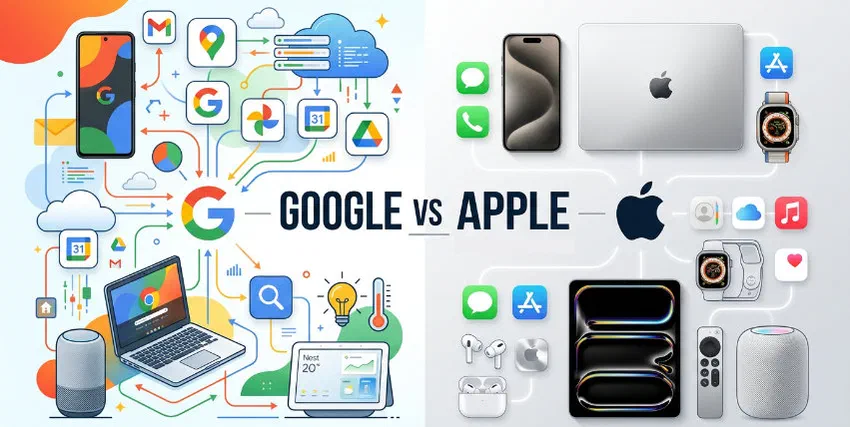
I get the pitch. Apple hardware feels polished. The whole ecosystem talks to itself on a demo table. It looks effortless there. iMessage, iCloud, AirDrop, the App Store, the watch on your wrist. I own some of that hardware. Glad I still don’t have to live inside the whole Apple ecosystem to get work done.
I’m still on the Google side of the fence. Not because I hate Apple. I run a MacBook Pro M4 for paid work and an 11th-gen iPad for reading and couch browsing. Both are excellent machines. I still sign into Gmail, Chrome, Drive, and Meet on them like everywhere else.
Google’s ecosystem matches how I actually live. Freelance work on a laptop. Family life in the Philippines. A TV that needed cheap smarts. An Android phone in my pocket. A backup handset buried in my bag.
This isn’t a phone-versus-phone argument. Apple sells accounts, storage, messaging, calls, browser, app store, and TV layer as one polished package. Google sells the services first. The hardware underneath can be whatever you already own.
Google is the glue across my Mac, iPad, Android phones, and the Linux boxes I build on. No single vendor has to approve the combination.
I Mix Brands on Purpose
Apple’s best trick is the closed loop: iPhone talks to Mac talks to iPad talks to Watch.
iCloud, iMessage, FaceTime, AirDrop, Find My, Apple Pay, and the App Store glue it together. Buy the whole set and a lot of friction disappears.
I don’t run the whole set. I run a MacBook for paid work and an iPad for couch reading. An Android phone in my pocket. Whatever box is plugged into the HDMI port this year. Google built its ecosystem to sit on top of that mess.
One Google account ties together Gmail, Drive, Meet, Photos, Calendar, the Play Store, and whatever Android TV box is under the TV.
The Mac is great hardware. So is the iPad. I still open Chrome instead of Safari, keep client files in Drive instead of iCloud, and take calls in Meet instead of FaceTime. Apple built the screen. Google runs the life on it.
Gmail works in every browser. Meet runs on the phone I already have. Sign in once on a Chromium browser and your bookmarks follow you without buying matching hardware. Drive holds client exports and photo backups without locking me into one phone brand.
Apple can do cross-platform now - iCloud on Windows, FaceTime links, all of that. I still feel like a guest in someone else’s house when I use Apple services off-Apple hardware. Google is built for that mix. The services are the product, not the logo on the back of the phone.
When the TV’s built-in apps rotted, I plugged in a Mi Box S without asking anyone. When I wanted banking on a separate handset, I bought a cheap Android and tucked it in my bag. When a client site needs testing on Linux, I ssh in and open the same Chrome profile. Apple wants you on Apple hardware with Apple cables doing Apple things. Google’s pitch is closer to “sign in here, use whatever screen you’ve got.”
No Compelling Reason to Buy the Rest of the Apple Set
The iPhone and Apple Watch are the completion sale. Buy the phone and suddenly iMessage, AirDrop, Apple Pay, wrist notifications, health data that only talks to other Apple things kick in. The demo table magic kicks in.
I don’t feel the pull. Google is already the glue. Same Gmail on the MacBook, the Android in my pocket, the iPad on the couch. Same account on the Linux machine running Hugo builds. One account. Same calendar, same Drive folders.
Meet links open on any of them.
I don’t have an Apple-shaped hole in my life.
An iPhone would cost premium money to become a worse fit in that mix. Green bubbles in group chats. iCloud as a second attic beside Drive. Another charger story. An Apple Watch would strap a worse phone to my wrist. That’s what they are to me: underpowered cellphones tied to your arm. They buzz with the same notifications my actual phone already handles. Glanceable? Sure. Compelling enough to wear, charge nightly, and pay for? Not for how I live.
Neither unlocks a workflow I’m missing. They’d just make me rebuy hardware so Apple’s ecosystem could feel complete.
Apple wants you to finish the set. Google already finished the job across Android, Linux, Mac, and whatever cheap box is under the TV. Until Apple services run my actual life better than Google does on my machines, there’s no reason to add an iPhone or a watch.
Apple’s Ecosystem Tax Keeps Climbing
I’m not saying Apple gear is bad. I bought some of it. I’m saying the whole Apple stack is expensive, and each year’s price bump buys less than it used to.
The hardware is only the entry fee. After that you stack iCloud storage tiers, Apple Music or Apple One, App Store prices baked into subscriptions, AirPods. Add them if you want the instant-pairing story from the keynote. Maybe an Apple TV box so the living room isn’t second-class.
You’re not buying a phone. You’re buying into a price band. Even the “budget” iPhone costs more than the cheap Android I keep in my bag for banking. The services keep asking for more on top.
The hardware hikes annoy me most. Every cycle the phone and laptop cost more. The chip gets a little faster. The port might change again so you buy new cables. I don’t feel the jump in daily life enough to pay the premium again.
Apple optimizes for people who want the best-feeling object in the room. I optimize for good enough hardware. I want money left over for the rest of life.
On Shopee I can sort by local sellers and land on a workable Android at a fraction of what a current iPhone costs. Same for a streaming box. Same for a backup handset I’d rather not cry over if it disappears on a trip. Google’s side lets me spend on Drive storage and the apps I actually use instead of rebuying the whole walled garden every two years.
Android Lets Me Buy Boring Phones
My daily phone doesn’t need to be a status object. It needs calls, maps, banking OTPs, Messenger, and a camera that won’t choke the first time I film something longer than a minute.
Android gives me choices at every price tier. When I wanted a second handset for bank apps, I grabbed something cheap and underpowered on purpose. Slow enough that I wouldn’t drift back to it. Solid enough to wake up for a one-time password. I didn’t have to justify a premium phone just to stay inside an ecosystem.
Shopee is full of Android options with replaceable batteries, expandable storage, dual SIM, whatever the week demands. Apple’s lineup is excellent if you’re already in and you’ve already paid the premium entry fee. It’s not flexible if you want a second phone you keep out of daily reach. Or a travel SIM box. Or a handset you’ll feel okay losing on a tour bus.
Brave for Me, Chrome for Work
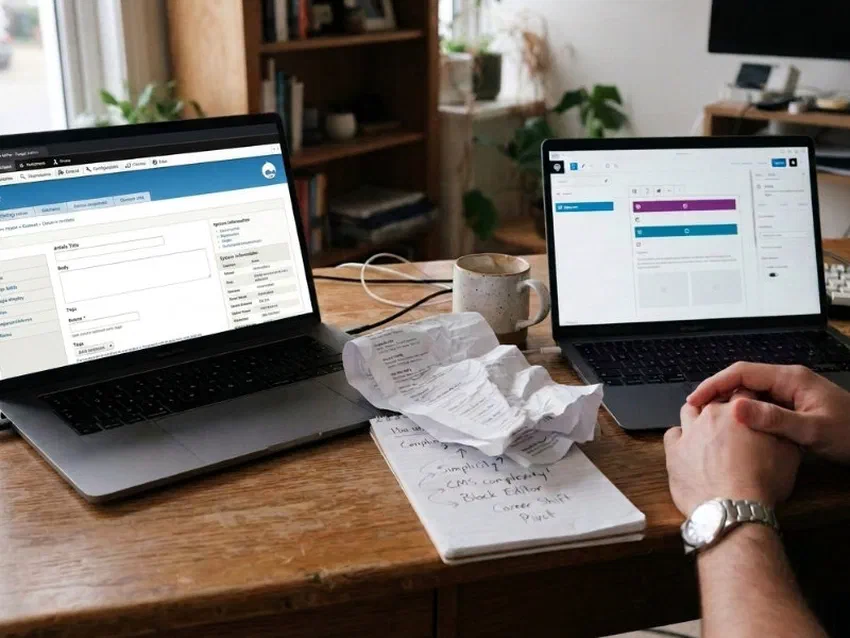
Most of my paid work still happens in a browser tab forest. Client WordPress admin, Google Meet, Slack, Hugo builds in a terminal beside twelve other windows.
Brave is my favorite browser for everyday stuff - reading, research, the tabs that aren’t billable. It blocks a lot of the junk by default, and it’s still Chromium under the hood, so the web mostly behaves the way I expect.
Chrome gets its own profile for work. That’s where I run client logins, dev tools, and the extension stack I need on WordPress builds. I also test every site through Chrome first because it’s still the world’s most-used browser. If a layout breaks there, a real visitor will hit it. Brave can look fine while Chrome shows the bug - I’ve learned that the annoying way.
I’ve watched Safari on a client’s Mac look fine for reading. Then it fights them the moment they need the same extension stack I run on WordPress builds. The Chromium family - Brave, Chrome, whatever - runs on Windows, Linux, and Android without me relearning habits. Apple’s browser story is basically Safari on Apple hardware. Everyone else gets a watered-down cousin.
Yes, both browsers are RAM hogs. Yes, Google still sees a lot of what I do when I’m in Chrome for work. I accept that split because personal browsing and client QA are not the same job. Google’s ecosystem doesn’t force me to pick one company’s browser religion to use Gmail.
The TV Problem Has a Cheap Google Answer
Our living-room TV was “smart” until it wasn’t - laggy menus, apps the manufacturer stopped updating years ago. The fix wasn’t a premium streamer. It was a Mi Box S running Android TV: Chromecast built in, YouTube signed in, remote with a Google Assistant button I mostly ignore.
Someone in the house casts from a phone. Someone else opens Netflix from the remote. Nobody needed to buy into Apple TV hardware or negotiate AirPlay quirks with a mixed-device family.
Could an Apple TV be nicer? Probably. I wasn’t optimizing for nicest. I was optimizing for good enough, HDMI, done.
Google Drive as the Shared Attic
Cloud storage is where ecosystems really stick. Once your photos, docs, and backups live in one company’s attic, switching phones feels like moving houses.
I keep repo zips and image folders in Google Drive as a belt-and-suspenders backup beside Git. Same habit I picked up when I moved JoRap Notes off shared PHP hosting. Git is the source of truth. Drive is the folder I can open on my phone when I need an image export. The laptop doesn’t have to be in my bag. Google Photos catches the family camera roll on the same account. I don’t have to think about which handset took the shot.
Apple’s version - iCloud, Photos, Keychain, device backups - can be elegant if everyone you know lives inside the fence. My world is messier. Android phones, a MacBook that still opens Drive first, an iPad that isn’t my daily driver. Drive feels like the lowest-friction shared attic for that mix. I didn’t have to upgrade hardware to unlock it.
Client Work Runs on Meet Links, Not Matching Laptops
This isn’t just my phone in my pocket. The same pattern shows up on WordPress client work.
My client workflow is boring on purpose. Send a Meet link. Share screen in Chrome. Walk through their admin while they click from whatever machine is on their desk. I’ve joined from my phone when the laptop was updating. They’ve joined from a beat-up office PC. Nobody had to standardize on one hardware religion first.
Most clients I touch look like that - mixed gear, tight budgets, people in the Philippines bringing their own phones. Gmail, Drive, Docs, and Meet in a browser beats telling everyone to standardize on one premium vendor before they can answer email.
I’ve seen all-Mac shops that worked fine. They also paid for every seat, dongle, monitor adapter, and spill replacement along the way.
That’s a budget line, not just taste. Google lets you keep the Windows fleet or hand someone a workable Android. Then layer the same inbox and shared drive on top.
New hire? Create an account, share the Drive folders, add them to Meet. Nobody has to buy matching laptops before that person can log in. Apple shines when the whole company can afford to buy in together, on the same cycle. The shops I actually touch can’t, or won’t.
What I Give Up (On Purpose)
I’m not pretending Google is the privacy champion or that Android is immune to bloat. My phone still ships with apps I’d delete if the OS let me. Google still nudges me toward services I didn’t ask for. Some Android skins are ugly in ways Apple would never ship.
Apple’s privacy story gets a lot of credit. Some of that is real. A lot of it is oversold.
Privacy from Apple is not the same as privacy. Most iCloud data isn’t end-to-end encrypted by default. Apple can still see a lot. In China they hand iCloud operations to a local partner. “What happens on iPhone stays on iPhone” is marketing, not architecture.
It’s mostly privacy from other companies. App Tracking Transparency hurt ad networks more than it hurt Apple. Conveniently, it also kneecapped competitors who relied on tracking while Apple’s own ad business grew. That’s not fake privacy. It’s not purely altruistic either.
Then there’s the Google search deal. Apple takes billions to keep Google the default search engine in Safari. Hard to claim you’re the privacy company while that’s your browser’s default.
And it’s relative, not absolute. “Better than Google’s ad stack” is a low bar. My actual life runs through Gmail, Chrome, Meet, and Drive. Apple’s device privacy is a smaller slice of the pie once your data already lives in Google’s cloud.
Apple wins on polish, resale value, and the calm feeling that things will just work if you stay inside the fence. If your whole family runs iMessage and FaceTime, switching to Android is social friction, not just a settings change. I won’t pretend that’s trivial.
iMessage is the petty layer on top. Your bubble turns green. Reactions break or show up weird. Photos arrive softer than they should. The Android person in the room is suddenly the one who “ruined” the thread. Not because anyone said it out loud. Because the app makes you feel like you brought the wrong phone to dinner. A lot of iPhone users don’t mean to gatekeep. The product does it for them.
I’m not looking for friends who treat hardware like a dress code. If staying in the loop means buying premium gear so my messages don’t look wrong, that’s economic exclusivity wearing a blue bubble. Hard pass. Messenger, Viber, a plain text thread: I’ll meet people on apps that don’t grade your bank account.
What I Actually Run
One Google account holds it together: Gmail, Calendar, Drive, Photos, Meet links, Play Store apps.
The MacBook does paid work - Brave for daily browsing, Chrome for client work and site testing. The iPad handles reading and couch browsing on the same account, not a second Apple life. Linux build boxes share that Chrome profile and those Drive folders. Google’s stack doesn’t care which kernel is underneath.
Phones: an Android daily driver plus a cheap Android in the bag for banking, buried deep enough that I won’t grab it by reflex. No iPhone. No smartwatch - it’s a weak phone on your wrist and my pocket already has a real one.
Living room: an Android TV box with Chromecast and YouTube signed in. Calls run through Meet on the open-ear pair I wear all day because I need to hear the doorbell between them. Drive picks up whatever Git isn’t the right tool for.
That’s what I run: one Google account across mixed hardware, no iPhone, no watch. Glad the mixed pile still talks through one login. If you’re choosing this week, sign into Gmail and Drive on the screens you already own before you buy the rest of Apple’s set. Finish the job with services, not a matching receipt pile.
Share