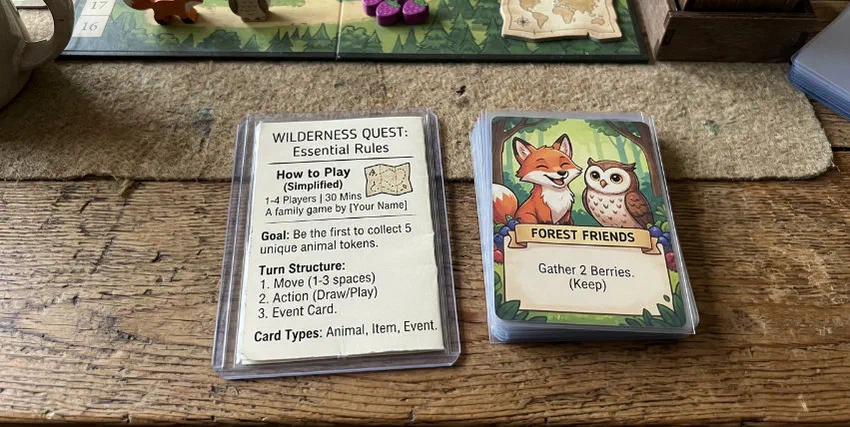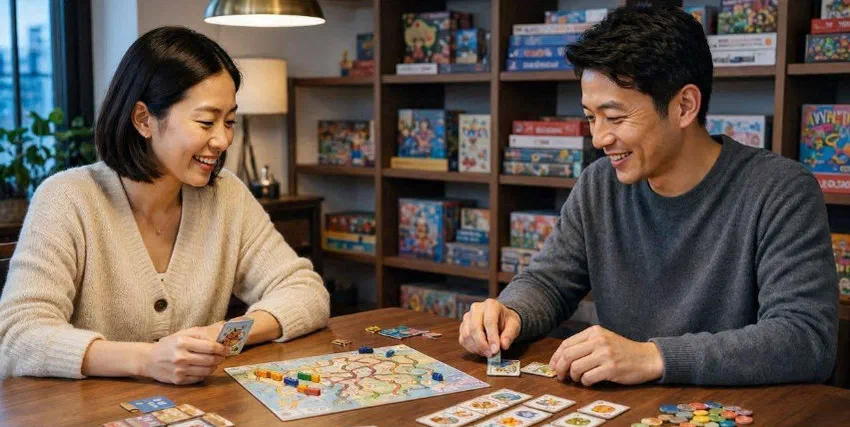
I love Hanamikoji for the mechanics - glad the published game exists so I had something worth retheming at all. The retail box has gorgeous art - colorful geisha portraits, illustrated performance items, a table presence that pulls you in. I kept playing for the I split, you choose puzzle. How you bundle cards. What you force your rival to take. When to burn a Trade-off. The theme is atmosphere. The split is the game.
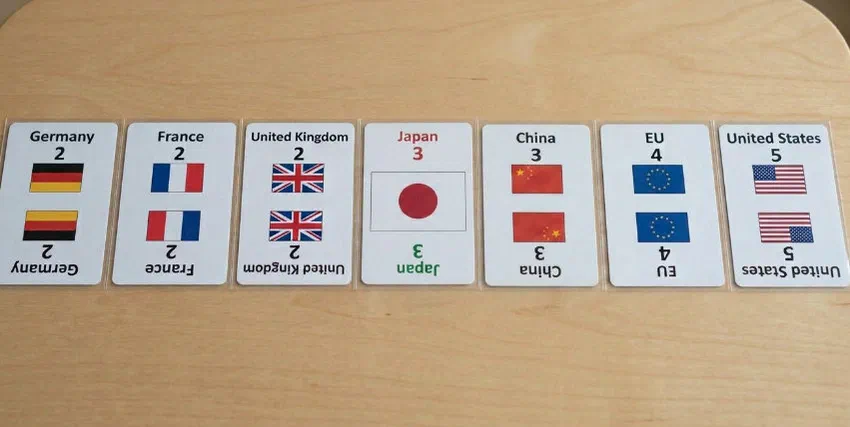
For a personal copy only I went the other way on purpose. Duopoly - two firms, seven country flags, almost no illustration. Not because the original art is bad. Because I wanted to strip the table down and see if the mechanics alone still pull people in. Plain flags get out of the way. You read counts and colors, not characters. The mental load goes to the offers on the table, not the artwork on the card.
Same skeleton. Deliberately dull theme. One card size. Fewer physical pieces. No files to download, no copies for sale - one deck for my shelf, built as a component-streamlining exercise.
The rules live in the zine I tuck beside the deck, so what follows is the retheme map and what I cut from the box. Build notes for private play, not a print-and-play release.
Why Flags Instead of a Reskin
A straight reskin chases the retail look - new geisha art, new item illustrations, same component sprawl. I wasn’t trying to match Hanamikoji’s production. I wanted to see two things: whether the mechanic still grabs people without illustration, and how far I could cut components before something broke.
Country flags are boring on purpose. Black while the round is still open. After scoring, green toward whoever took the market, red toward the rival. Deal cards repeat the same flag small in the corner plus a point number. No scene to admire mid-turn. That’s the point. When someone lays out a Gift or a Competition, the question on the table is which pile hurts me less. Not what pretty picture landed in front of me. If the game still bites with flags and numbers, the mechanics are doing the heavy lifting.
The business frame helps the same way. Geisha favor becomes market control. Item cards become deal cards. Charm points become market value. The four actions still read clean: backroom Secret #1, painful Trade-off #2, public Gift #3, head-to-head Competition #4. One of each per player. Dry nouns. Sharp decisions.
Retail Hanamikoji uses oversized geisha boards and smaller item cards, which means two print templates and two sleeve sizes at home. I print poker-size everything. One cutter pass, one sleeve SKU, one stack in a tuck box.
Same mechanics, less table clutter. People still lean in when someone fans out a Competition. The geisha atmosphere is gone; the tension is not.
Geisha Favor Becomes Market Control
One-to-one where it matters. If the retail name doesn’t appear in the left column, I didn’t rename it.
| Hanamikoji | Duopoly | Notes |
|---|---|---|
| Geisha card | Market card | Seven countries in a center row |
| Item card | Deal card | Count matches market value (2-5); small flag + points only |
| Charm points | Market value | Printed on market and deal cards |
| Victory marker | Card flip | Flip at scoring only; green toward leader, red toward rival |
| Action marker / tile | Action card | Secret #1 through Competition #4 on face; one of each per player; flip when spent |
| Win 4 geisha | Win 4 countries | Same threshold |
| Win 11+ charm | Win 11+ points | 21 total across all markets |
| Secret #1 | Secret #1 | 1 card tucked face-down |
| Trade-off #2 | Trade-off #2 | 2 cards out of play |
| Gift #3 | Gift #3 | 3 revealed, rival picks 1 |
| Competition #4 | Competition #4 | 4 as two pairs, rival picks a pair |
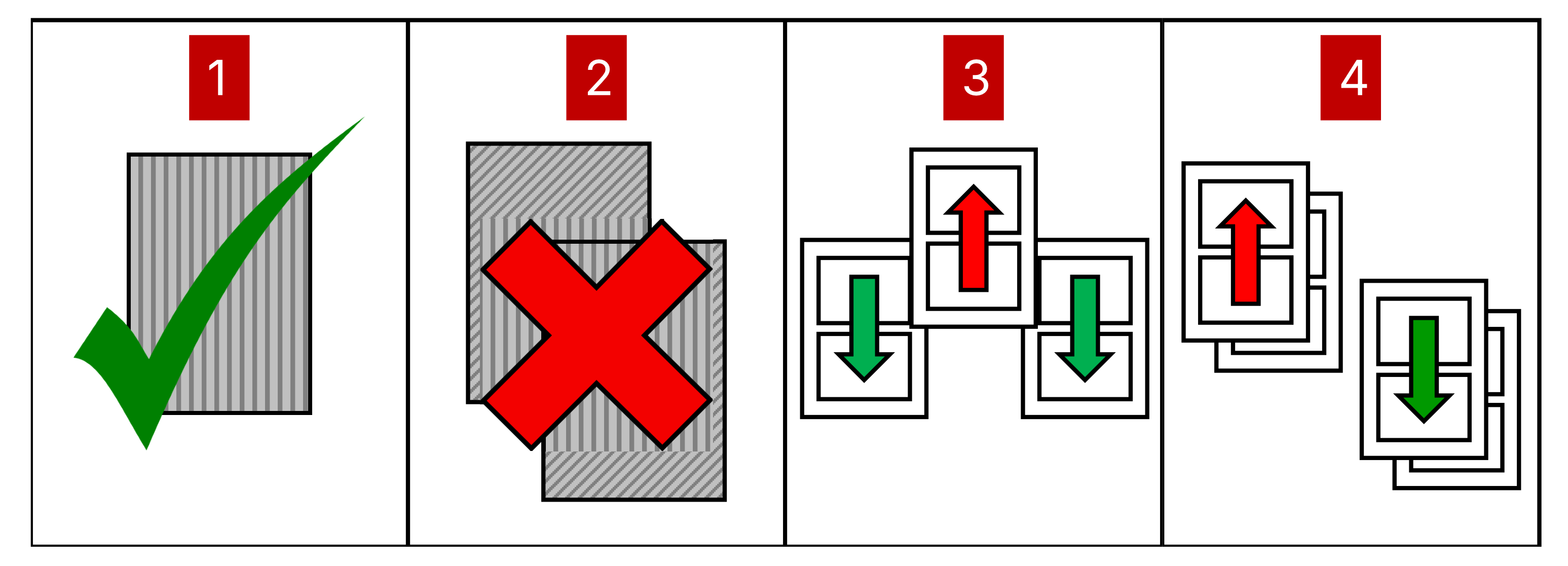
The Seven Markets
Point values and deal counts follow retail - charm equals the number of item cards of that type. I only renamed the faces.
| Country | Points | Deal cards | Hanamikoji equivalent (charm) |
|---|---|---|---|
| Germany | 2 | 2 | 2 |
| France | 2 | 2 | 2 |
| UK | 2 | 2 | 2 |
| China | 3 | 3 | 3 |
| Japan | 3 | 3 | 3 |
| EU | 4 | 4 | 4 |
| US | 5 | 5 | 5 |
Row order left to right: low value to high, same as setup in the original.
Flip the Country, Not a Token
Retail Hanamikoji keeps each geisha card fixed in the row. Control is a victory marker you slide toward yourself or your rival - but only in the scoring phase, after both players have taken four turns. Deal cards pile up next to each geisha all round; the marker does not move mid-turn.
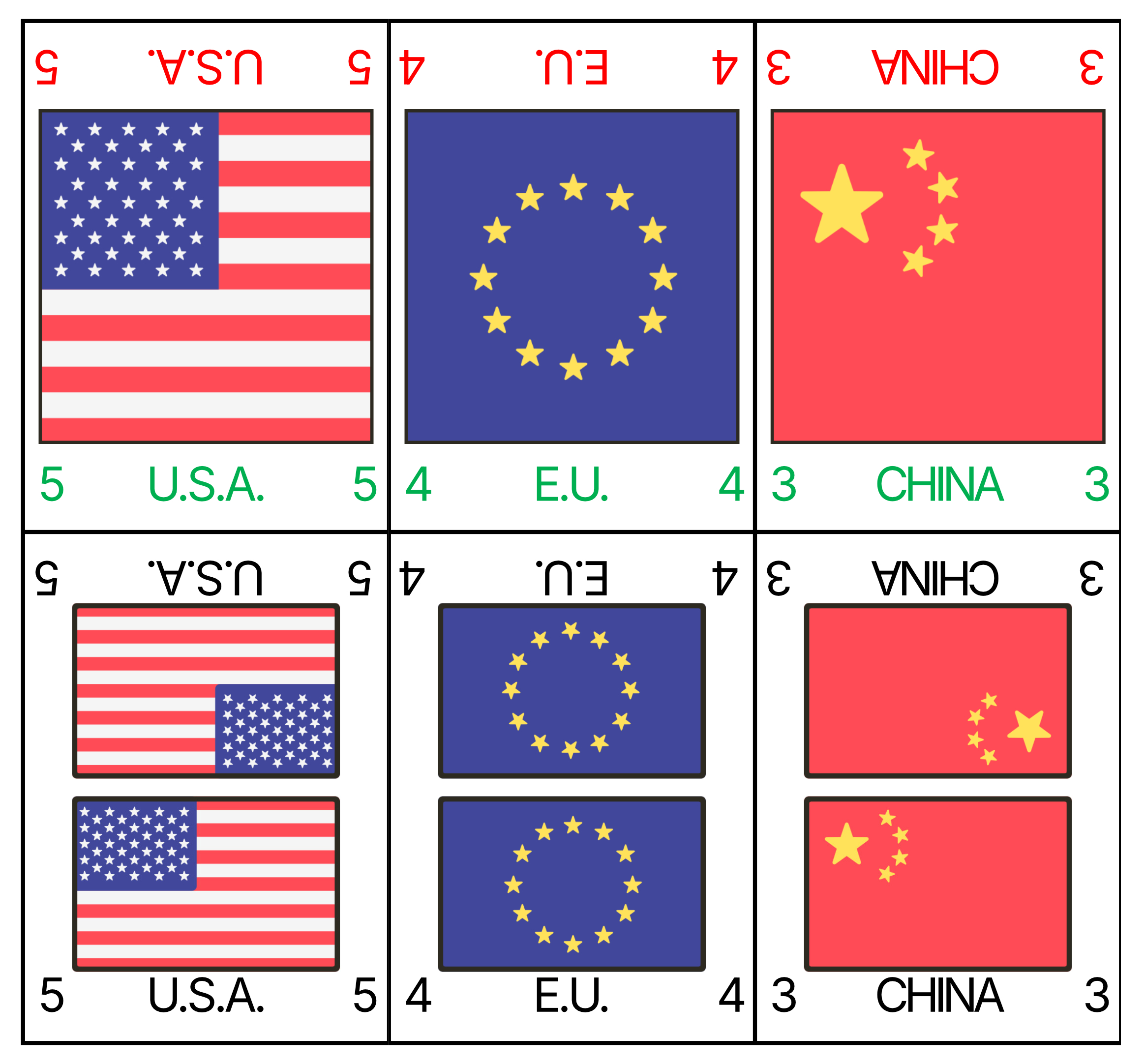
I baked control into the country card itself. Same card, two faces - no chip to nudge. Same timing: flip only at scoring, when you compare deal counts on each side.
During the action phase: market cards stay neutral - double flag, country name and points in black. Deal cards land beside them, but the row still reads open.
After scoring: whoever has more deal cards on their side takes the market. Flip to the controlled face - one flag, green toward the winner, red toward the rival. Stolen back next round? Same face, rotate so green points the other way. Tied or empty - leave the card as it was.
You never hunt for a marker. You never bump one off-center. The country card is the state - but only updates when the round ends, same as retail.
From 43 Bits Down to 36 Cards and a Zine
Every piece I removed had to prove it earned its spot. Seven victory markers, two card sizes, separate action tiles - gone if the flip and the action cards could cover the same job.
Retail Hanamikoji (approximate):
| Piece | Count |
|---|---|
| Oversized geisha / board cards | 7 |
| Item cards | 21 |
| Action markers | 8 |
| Victory markers | 7 |
| Total distinct bits | 43 |
My full Duopoly build:
| Piece | Count |
|---|---|
| Market cards (same size as deals) | 7 |
| Deal cards | 21 |
| Action cards | 8 |
| 1-page zine (rules) | 1 |
| Total | 36 cards + zine |
Seven victory markers gone - the country card flip at scoring handles control. Geisha and item size split gone - one template.
Eight action cards - four per player, one of each: Secret #1, Trade-off #2, Gift #3, Competition #4. Name and number on the face, same order as retail. Easier to read across the table than flipping little tiles. Secret #1 and Trade-off #2 tuck under theirs; Gift #3 and Competition #4 stay face-up so your rival has to see the split.
The cut from 43 distinct bits to 36 cards plus a zine is not minimalism for its own sake. It is a proof of concept: the engine runs lean. That also makes me think the publisher could swap themes. Business, sci-fi, sports, whatever. They wouldn’t have to touch the split. Same machinery, different skin. I would buy an official alternate theme if one existed. The geisha art is the reason many people pick up the box. The mechanics might be the reason they keep playing.
How I Actually Win
Rules live in the zine. This is the stuff I wish someone had told me after the first three losses - the habits that make the split feel less random.
Count cards per country. Deal count matches market value - two for Germany, three for Japan, five for US. Whoever has more on their side when the round scores takes the market; nothing flips until all eight turns are done. Each round also buries one card unseen before the deal. I track what’s still in the deck - two UK left, Japan has one on their side - same as counting outs in a trick game. Flags help. No portrait to stare at, just color and number.
Two ways to win, pick a lane early. Four countries or eleven points. Eleven is just over half of twenty-one, so the point race is always live. Three cheap 2-point flags can still close the country win if you stack Germany, France, and UK. You need a fourth market somewhere. You don’t have to pile up US and EU to get there. I decide by mid-game which path is still realistic. I stop donating cards to the path I’m not chasing. Chasing both is how you lose both.
Block before scoring. During the round, deal cards sit beside each market but the row does not flip yet. You are still building toward whoever has more when the eighth turn ends. If they have one Japan toward them and you have zero, that row is urgent - even when another pile looks juicier.
Trade-off is denial, not cleanup. Two cards from your hand sit out for the round. Not scored, back in the shuffle next round. Sounds defensive. Often the best attack. When you hold the last China and your rival only needs one more, tuck it under Trade-off. You can deny them the row this scoring phase entirely.
Gift: they pick one, you keep two. Three cards face-up; rival takes one, the other two land on your side. Two from the same country is strong when you want that 2-point flag - you end up with both, they get none from that Gift. On a 3-card market like Japan, three of a kind in a Gift still leaves you 2-1. The bad Gift fans a card they are happy to cherry-pick while your pair is dead weight. Make the pick painful; make the two you keep do real work.
Competition: pair the pain. Four cards as two pairs, they pick a pair. Bundle the card they need with junk, or split so whichever pair they take gives you the better board. Competition is for when you would rather they take two cards than one - or when both pairs are bad and you are fine either way.
Secret timing. Early Secret hides which row you are chasing. Late Secret, when you have tracked what is left in the deck, tucks a decisive card from your hand without showing the split. The cost is one fewer public Gift or Competition that turn - worth it when the third Japan card is the whole round.
Respect US and EU. Five and four points swing the eleven-point win. Letting someone take two US deals early is hard to recover from. I fight those rows harder than the three 2-point flags even when the country count looks fine.
Spend each action once per round. Four turns each - Secret #1, Trade-off #2, Gift #3, Competition #4, one time each. Wasting Competition #4 on a thin early board leaves you with only Gift #3 when the row is crowded. Every split stings. I save the action that fits the late-round count. Usually Competition #4 or Trade-off #2 when the last cards of a country are in play.
None of this replaces reading the split. It just stops you from donating countries while you admire your own layout.
What I Actually Print
- 36 cards: 21 deals + 7 markets + 8 action cards (Secret #1 through Competition #4, one of each per player), double-sided where it matters
- Zine: rules only
- No victory markers, no second card size
Rules stay in the zine so this post does not duplicate them. The mapping table and build table are what I needed at the layout tool. Theme in one column, part count in the other.
Personal Use Only
Duopoly stays on my table. I’m not publishing PDFs, selling copies, or handing out a substitute for the retail game.
Hanamikoji (mechanics, structure, scoring, the whole design) belongs to its creators and publisher. I rethemed the faces and cut components so I could play at home without copying retail artwork. That’s personal consumption, not a product.
I want to stay on the right side of copyright and trademark law. I’m not a lawyer. I don’t know every rule in every country. What I do know is what I’m willing to do. Keep the deck private. Credit Hanamikoji. Point anyone who wants to play toward the published box.
If you already own Hanamikoji, you don’t need this. You have the real thing, art and all - glad that version is still what I’d tell a friend to buy. If you don’t, buy it from the publisher. This post is my private build log: flags, business nouns, one sleeve, fewer bits in the box, not permission to reproduce someone else’s game.
Share