If you have ever tried to fit a full teach onto one reference card, you know the wall. Glad I hit it writing rules for a two-player card game instead of printing a booklet I didn’t need. A full rulebook felt like overkill for a 15-minute game. One card could not hold setup, scoring, and four different actions without turning into unreadable microtype.
What I wanted was a small booklet that still fit in the box. Print it on one sheet at home. Fold it by hand. No binding, no staples poking through the shrink wrap.
That is what a 1-page zine is. One piece of paper becomes an eight-page mini book. Fold it, hand it out, done.
What You Actually Get
Start with one letter-size sheet (8.5 × 11 in). Fold and cut it the classic zine way, and you end up with eight faces - front cover, back cover, and six inside pages.
I stick with letter because that is what my printer expects and what most zine templates in the US are built for. A4 works with the same fold, but I would rather not rescale layouts every time.
For board game rules, I lay everything out in landscape. Each panel is wider than it is tall. Rules read better that way at this size. Turn order goes across the page. Action rows sit side by side. You get room for a small diagram without shrinking the type.
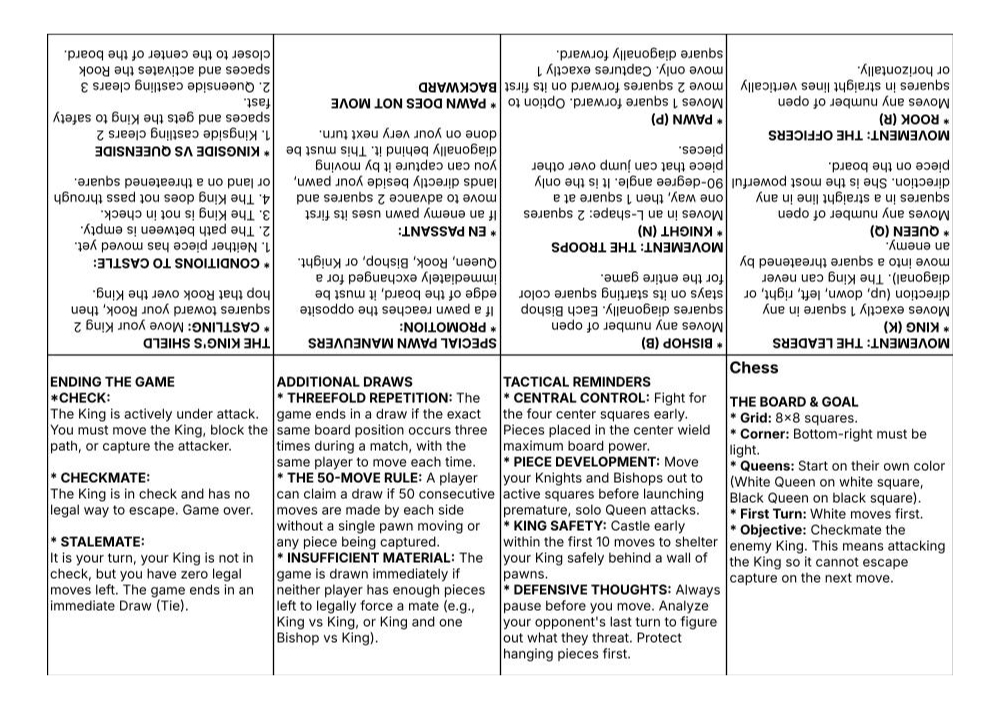
Eight pages is the sweet spot. I split them like this:
- Front cover - title plus the rules you need every turn (win condition, turn summary)
- Back cover - quick reference (action list, scoring reminder, icon key)
- Inside pages - full teach: setup, each action explained, examples, edge cases
The cover faces do the heavy lifting. Most of the time you do not need to open the booklet at all.
Why It Works for Board Game Rules
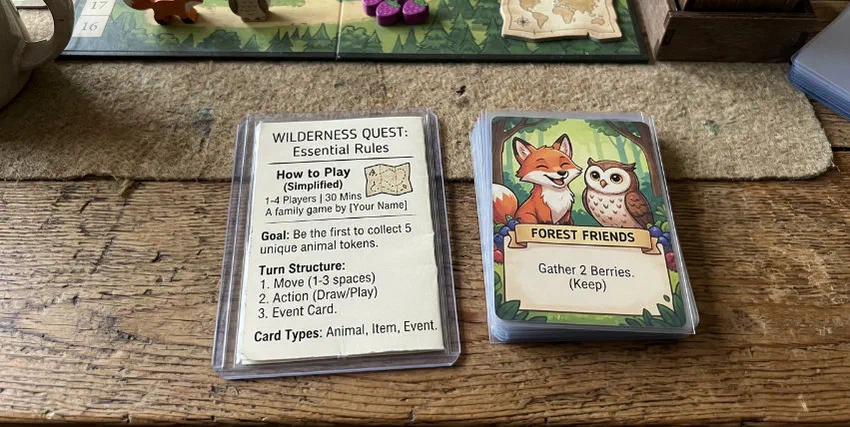
It fits the box. I size the folded booklet to the game’s cards first. Measure the card, then lay out the zine slightly smaller than that. A folded booklet has thickness; if you match the card edge exactly, it binds in the sleeve. Shave off a few millimeters and it slides in clean. The rulebook gets its own sleeve - same size as the card sleeves for that game, not a different format. Cover and back face out through the plastic, so the essentials stay readable without pulling it out every round.
One sheet means cheap prototypes. Print-and-play designers know this already. You are not committing to a saddle-stitched booklet at the copy shop while the rules are still changing. Print ten copies on your home printer, playtest, fix a typo, print ten more.
Players treat it like a book, not a poster. A trifold rules sheet works. But people unfold it across the whole table and never fold it back. A zine stays closed. You open to the page you need. Less table clutter.
Forced editing. Eight pages sounds like a lot until you lay it out. You cannot hide behind page 12. Every section has to earn its spot. That pressure is good for rules writing. If a rule needs three paragraphs of exceptions, you notice, and you simplify the game or move the detail to a FAQ online.
I am using this format for a card game rules draft right now. Setup, the four actions, scoring, and a worked example each get room without cramming.
The Hanamikoji Teach Night, and Where Else I’d Print One
Last month I printed eight-panel zines for a Hanamikoji teach: setup on the cover, action reference on the back, full rules inside. I put a stack on the sign-in table and nobody asked me for the PDF. That’s the whole pitch.
Once the fold is in your head it shows up everywhere else too. A workshop handout for a two-hour session, cheaper than a bound workbook. A quick-start card for a new tool at work or volunteer onboarding, where a cover plus six steps plus troubleshooting fits without squeezing. One meal with its variations and a shopping list on the back, instead of a whole cookbook. Story prompts or scavenger hunt clues, one sheet per kid, no collation nightmare. A leave-behind after a client call, professional enough to hand over and casual enough that nobody feels guilty tossing it later.
The pattern is always the same: bounded information, pocket-sized, one print job.
Where the Format Falls Apart
Eight pages on one sheet means small panels, so tiny type is the first limit you hit. If the people reading it need large print, bump up to a two-sheet zine or a simple folded letter and stop fighting it.
Photos and full-bleed illustrations fight the format too. Rules, text, simple diagrams, and icons are where it works. Long reference material is the other miss - strategy guides, full card lists, expansion rules all belong online or on a separate sheet. The zine is the learn-to-play layer, not the encyclopedia.
And if you are pitching a boxed game to a publisher, they will want proper components. This is a dev tool and a print-and-play staple, not a stand-in for production values on a shelf product.
How I Lay One Out
- Measure the game’s cards. Poker-size, tarot-size, custom - whatever the deck actually is. That number is your target, not letter paper. Buy sleeves for the rulebook in the same size as the card sleeves.
- Set the folded booklet slightly smaller than the card (I trim a few millimeters off each edge). Landscape layout, landscape finished size. The booklet should drop into a matching sleeve without fighting the fold.
- Write the rules in plain text first. Get the words right before you worry about panels.
- Drop text into a letter-size 8-page zine template in landscape (search “8 page zine template letter landscape PDF”). Design in spreads - page 1 is the front cover, page 8 is the back. Scale or trim the sheet so the folded size hits your target. InDesign, Canva, or even a Google Doc with a grid works.
- Print a test copy on cheap paper. Fold it. Slide it into a sleeve that matches the game’s cards. If it catches, trim a hair more.
- Print the final on slightly heavier stock if you have it. 80-100 gsm feels less flimsy than standard copy paper. Not required for a prototype.
For game rules specifically, I treat the cover and back cover as the in-play reference. Win condition, turn order, action names, scoring. The rulebook sits in its sleeve beside the deck. That’s what you see on the cover. Setup and the full teach live inside. Open it once at the table. Then close it and leave it there.
If you need a booklet and you do not need a binding, the 1-page zine is the fastest honest answer. One sheet, one cut, eight pages. Glad that format still fits the games I teach. Print one on cheap paper this week, fold it, and see if eight panels hold your rules before you commit to a saddle-stitched booklet.
Share