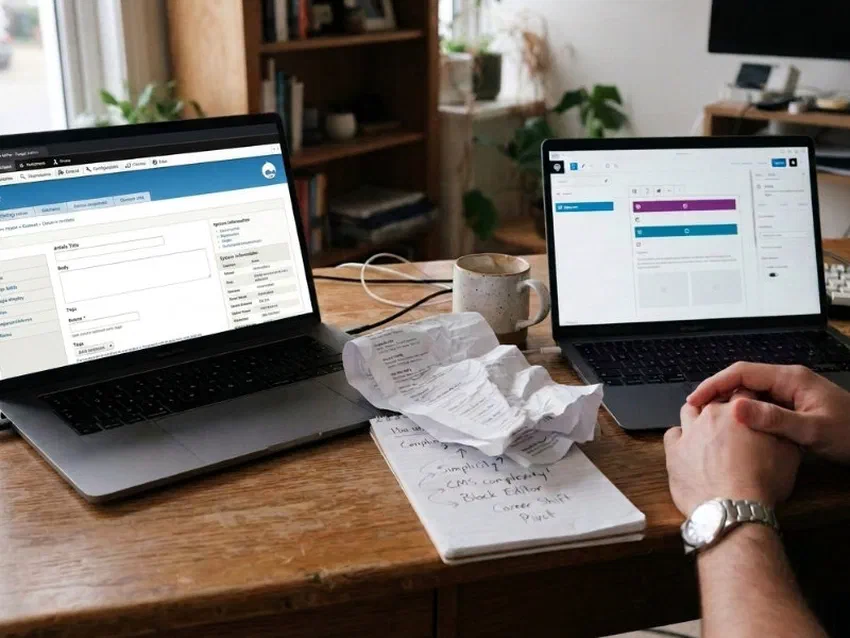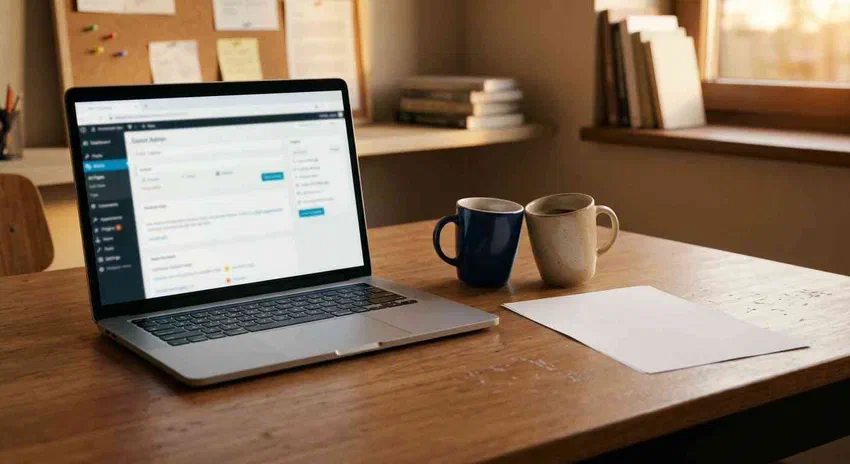
If you are hiring someone to build your business website, you may hear “free software” or “open source.” That can sound cheap. It can sound like they are cutting corners.
I build sites for small businesses. Years ago another vendor mocked me in front of their friends. I had used free tools on a client project. The site was fine.
They were pushing a simple story. I got the program for free. So the work must be substandard. And I was charging the client for software I never bought - not for the hours that turned their brochure into a site.
The joke was the accusation. That same person talked a smooth game on sales calls. They used the same kind of free website tools I use. They quoted big contracts and cashed the checks. Then they missed deadlines and delivered less than the quote promised. That is what the client felt - not whether my hosting bill had a fancy logo on it.
I am not naming the vendor or that client on the page. I checked recently. The public site from that vendor’s build is not online anymore. I have also heard feedback that the delivered work was poor.
The joke was about free open software. The license really was free. I still delivered that client’s site. They still pay me for updates and fixes. That site is still online. That is a fulfilled contract. It is not proof I resold a program.
I am naming the pattern. The download and the invoice get mixed up on purpose sometimes. Some people think the job is selling software or looking expensive on a slide. What owners need is work after the install: layout, menus, forms, training, fixes. The person who talks best is not always the person who finishes.
I was never selling the program. I do not resell a license. I do not say “buy WordPress from me.” You are not paying me for a copy of the installer.
Open source is more than “free software.” Yes, you can often download it without a license fee. The bigger point is open code: the instructions behind the site are visible, not locked in one company’s vault.
That matters when you need help. On closed products, only the vendor (or their partners) can safely change the deep parts. On open source, any skilled shop can read the code, fix it, and adapt it for your business. You are not stuck with one brand’s permission slip. You can hire someone else later. You can get a second opinion. Competition for your service is possible because the source is there to work with.
Open source, in plain English, is freedom to use, study, and change the tool. It is also freedom for others to serve you. They can see what they are modifying. It is not a download you got for free and nothing else. You still bend it until it fits what the business needs. That bending is the work you pay for.
What Open Source Means on Your Quote (More Than Free)
Skip the conference talk. Here is the plain version.
Free to download is only the first layer. WordPress is the name most owners have heard. So are other tools builders pick. You can download them yourself. No one sells you a shrink-wrapped box with a one-time unlock code for the core product.
Open code is the second layer. The program’s source - the recipe builders and fixers read - is public. That is why your quote can say “we use open tools” without trapping you with one reseller. Another agency can take over. A freelancer can patch a bug. You are paying a person to work on something inspectable, not a black box only one company may touch.
That download does not build your site. It is like getting a free kitchen stove. The stove does not cook dinner. Someone still shops, chops, seasons, and plates the food. On a website, someone still chooses how pages look, where the phone number goes, and whether the contact form actually sends email.
Your invoice is for that work - not for “one unit of website license.” Serious shops bill outcomes. The site launched. Products online. A booking form that does not lose messages. Not a line that sounds like you bought permission to open the installer.
When an owner asks, “Are you just using free software?” the honest answer is partly yes on the license fee. It is also yes, this is open source on the code. So is most every small web shop in town unless they built their own system from zero.
What you are buying is a person who can shape that open tool for you. It is not a boxed product from a store. The real question is will they still answer the phone after you pay the deposit. Open code does not tell you that. Their past clients do.
What You Are Actually Paying For
You are not buying a copy of WordPress on a USB stick. You are buying a website that works.
That means pages people can read on the phone they carry. Forms that reach your inbox. A checkout or booking flow that does not break the week you go live. Someone who fixes what they broke.
The slow part is rarely the download. It is the service to make the program fit your business:
- Look and feel so the site matches your brand, not the default demo template.
- Organizing information - what belongs on the home page, what gets its own menu item, what sits in the footer.
- Brochure pile to usable site - phone numbers, services, photos, hours, turned into something a visitor can actually use.
- Forms and small flows wired so submissions arrive and buttons work on mobile.
- Hosting - where the site lives online.
- Domain and security - the address people type and the padlock in the browser.
- Training, updates, and fixes - including “why is checkout gray on my phone?”
If the program is free to download, you could do it yourself on weekends. Nobody stops you.
You can get the software for free. You still need time to learn it and customize it for your business. A builder spends that time for you. That is a big part of what you are paying for.
Most owners already run the shop, the clinic, or the team. They pay because experience is faster than learning hosting, design, and broken add-ons while the business still needs attention.
Good builders also handle the boring middle. That is the gap between “it is installed” and “my staff can log in and update the hours.” That middle is most of the job. I put money into hosting. I put time into setup and design work. No download button gives you that part.
That client build is the scoreboard I care about - live site, repeat work, not who won an argument about license fees.
AI Changed the DIY Option - Not the Invoice Logic
The old story still holds. Free program on the computer, pay a human to go faster. AI adds a new path. You can download the same free tools.
You can open a chat assistant. Ask for page ideas, wording, or layout tips. Ask “what add-on should I use?” You might not need to buy a license from anyone. You might not need a builder’s first draft either.
I am not pretending that path is fake. I use AI on client work for first drafts and small fixes. So can you, on a Saturday.
If you use AI to customize the site, you still pay for AI usage - tokens or credits on a chat plan. Free software does not mean free labor. AI help does not stay free once you are serious about a real launch.
That still does not give you a finished business site in a box. The free download was never what kept clients paying a pro. A chat prompt is not either.
What a good builder sells has to be better than DIY plus AI - not prettier slides about “strategy.” A site that actually launches. Forms that send mail. Updates that do not break checkout when you need it most. A set of add-ons someone will stand behind when real customers show up.
AI can cheerfully suggest three extensions that fight each other. It can suggest a setting change that does not match your host’s control panel. Someone still has to read the output, test on a real phone, and stay reachable when the site breaks on a Friday afternoon.
The builder and the owner might both use AI. The builder still adds judgment. That means how pages are grouped and what your staff can maintain after you take over. It means saying no to a shiny extra that will break checkout six months later. Speed without that layer is just a faster mess.
The business model is still the work. The work is proving you are worth more than “free download plus chat thread.”
“Free” on the Server Is Normal Too
The same people who mock “free website tools” rarely complain about the free operating system on the server that runs most small-business hosting.
Your site lives on rented space in a data center - a host.
Inside that box, the industry often runs on shared layers. Server software. The database that stores your pages. The common language many small sites use. Nobody invoices each layer on your quote one-by-one.
Nobody lectures a builder that the business is fake because the host did not buy a Windows license for every small account.
When a site truly needs Windows hosting, you often see an extra license line on the bill before anything is installed. Linux-style hosting is common partly because that layer costs less up front. Sometimes the host bundles it. Sometimes it is simply not there.
Same idea one step below the website program. Free to run is not free to set up for your business. Someone still wires the database. Someone still sets up the security certificate and backups. Someone still opens the hosting control panel and connects your domain name to the right place.
Big Companies Use Free Layers Too (You Just Do Not See the Receipt)
It is easy to laugh at a small business site built on free tools. Corporate IT does not treat that as a punchline.
Much of the internet runs on the same idea. Core software you can use without buying a boxed product. Paid support or paid people on top if you want it.
That does not mean the bank pasted its private code online for anyone to copy. It means the foundation layer is often shared. That is the same family of idea as the free website programs small shops use.
One vendor can call a small-site builder “shady” in public. They can quote the same kind of tools on a glossy proposal in private. That is selective storytelling, not a rule owners should live by.
On the website platform side, closed-license products still hit small and medium businesses hard. You pay just to buy the software before themes, migration, or form tuning.
Sitecore and Adobe Experience Manager are classic big-company names. Quotes start with a license, then services, then hosting.
Kentico and Optimizely sit in that lane too. Real products. Real invoices. Often a bad fit when your team is five people and your “IT department” is you plus one freelancer.
For a bakery, a clinic, or a regional distributor, that license cost can eat the whole project budget. That can happen before the homepage exists. Free-to-start website tools do not remove the need for skill. They remove the big fee on day one. You still pay in time. You still pay the person who sets it up.
Two builders can start from the same free download. One hands over a working site and stays reachable. One cashes the check and goes quiet. Owners rarely book phase two with the second kind.
The Double Standard Owners Should Notice
The pattern is selective, not mysterious.
Free tools on your project - suddenly someone says you are cutting corners. Free tools on their proposal - that is “industry standard.” A high quote reads as expertise. A missed deadline and half-finished site reads as “complex project.”
Linux-style hosting on the server is normal. Common languages on big apps are normal. A small shop runs a free-friendly website tool on the marketing site - and somehow that line is the suspicious one.
Smooth talk buys the signature. Delivery is what you remember. A high price is a promise. When the site does not match it, you were not “investing in quality.” You were overpaying for what landed.
Free tools do not make a vendor honest by default. They do make the gap obvious. Clients do not come back for the download. They come back when the site works.
I have been doing web work long enough to know price and tool names are both theater sometimes. You might not spot a fragile setup until real traffic hits. You can tell if someone shows up after go-live. Contracts are promises. The number on the paper should match what you get.
How to Read a Quote Without Getting Fooled
You can ask for references. You can insist the quote lists outcomes - launch date, training, who handles updates - not fake license line items.
Ask what happens after launch. Ask who holds the logins. Ask whether forms and mobile layout were tested on a real phone.
I am thankful for clients who cared about delivery more than logo wars on a slide deck. I am thankful for the ones who came back because the first site actually launched.
What I Still Do (In Plain Terms)
Client work still goes to WordPress when the job needs shopping carts, logins, or editors who will not work in plain text files.
I use AI on those builds. Clients can too. They still spend time and AI usage if they DIY.
Different tools, same rule: the invoice is for output they could not get to alone. Not a faster mess with the same free starting point.
If you build sites for a living, remember: sell the service, not the installer. Theme. How pages are grouped. The hours that make the site theirs. Host or help them host. Write down logins and how-tos for their team. Fix what you broke.
If you are hiring, remember: you were never buying the installer anyway.
Open source was never the hustle on either side. Showing up after the deposit was.
Builders who want the longer technical take on why I use open tools: Why I Focused on Open Source.
Share