On Monday my wife messaged me on Messenger, annoyed at herself. Sunday was a family outing, so she had swapped to a different bag. Leaving the work ID at home made sense that day.
Monday she carried that same outing bag again. She did not switch back to the bag she last used for work. Her work ID was still at home, loose in a pocket of the bag she did not bring. It was not in the small zip bag we have talked about.
The outer bag is fashion and space. That inner bag is your real wallet.
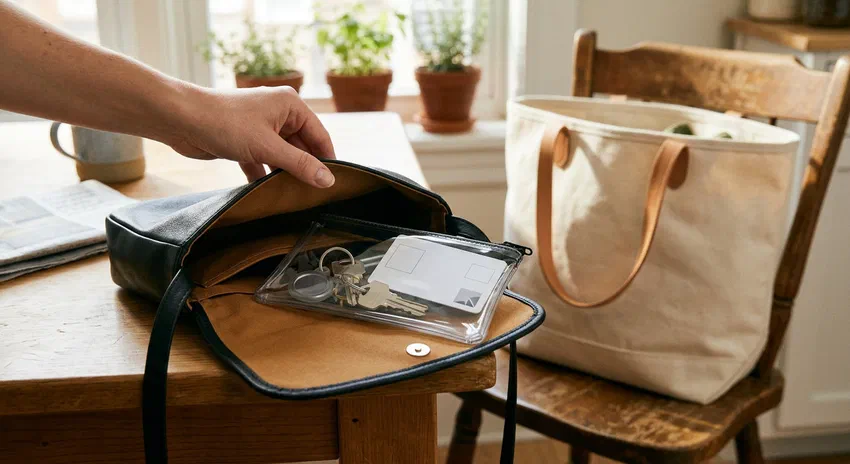
Keep must-haves in one smaller pouch or zip bag. It should fit easily inside whatever handbag, tote, or backpack you carry that day. Clear plastic, fabric pouch, old cosmetics case - shape does not matter. ID, keys, cards - the stuff you cannot leave behind. When you change bags, lift that piece out and drop it in today’s bag. You do not repack item by item.
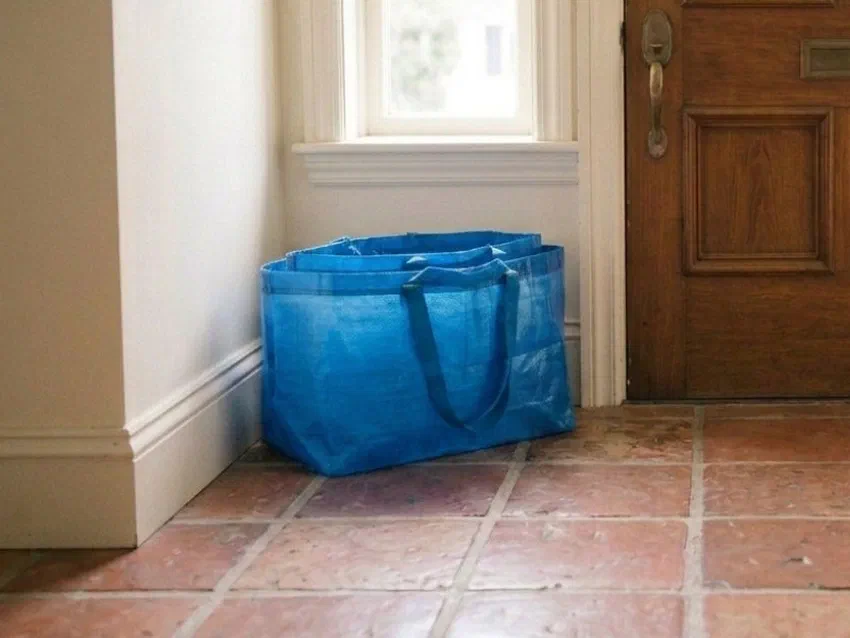
Same contents every day. Same inner bag whether today means a work tote, a small crossbody, or an outing bag. I move the same small zip from my blue IKEA FRAKTA to my black Nike bag when the day needs it.
That one move saves time and stops you from forgetting something in yesterday’s bag.
Swap Often, Swap Rarely - Same Fix When You Do
Some people match the bag to the day - work, church, errands, travel. More swaps per week means more chances to lose ten minutes or leave an ID behind. The inner-bag trick is built for that rotation.
Others keep one bag for months or years on purpose so nothing stays in yesterday’s tote. That works too. This post is not telling you to change bags more often. The pouch helps when you already swap, or on the rare day you grab a second bag. With only one outer bag, the same pouch still beats scattering ID and keys in loose pockets.
Most days I carry the blue IKEA FRAKTA. Errands, church with the family, grocery run - the usual. I wrote about that bag already. It is not fancy. It works.
Sometimes the blue FRAKTA is not appropriate. Client lunch, a wedding, anything where a giant IKEA tote sends the wrong message. For those days I switch to a black Nike bag. I do not repack my wallet into new pockets. I lift my smaller zip bag out of the FRAKTA and drop it in the Nike. Same ID, same keys, same cards. Two bags, one transfer.
Desk days add a laptop bag for cords and keyboard. The same small bag hops in and out. You still forget stuff when you skip the transfer, whether you own two bags or six.
What You Save When You Swap Bags
Time first. No dump-and-repack on the bed. Lift the pouch out, drop it in the bag you are using today, check the strap, leave. The outing tote and the work bag are just shells. Only the essentials bag has to move.
When must-haves stay in one place every day, you skip the item-by-item checklist. Did the ID move? Did the keys move? If that pouch is inside today’s bag, they moved. If it is still on the dresser, you notice before you reach the gate.
That Monday miss shows the real cost. Sunday was fine. Monday was work in the wrong bag with no transfer. You lose time, not just face. Calls, trips home, drama at the security desk.
The big outer bag stays tidier too. Side bonus. The main win is moving fast without leaving your life in yesterday’s bag.
Outer Bag Is the Shell; Essentials Are the Core
Think of your essentials as the core and the outer bag as the shell you pick today.
You change clothes for church, work, and a family day out. Nobody expects you to leave your wallet in yesterday’s jeans. Loose packing does exactly that when every tote has different pockets.
Two honest strategies: keep one bag for a long time and skip swapping, or keep rotating and move one inner pouch each time. This tip supports the second path. It does not ask you to buy more bags or swap more often.
When you do use more than one outer bag, one stable inner pouch packed the same way every day is the fix. It is not “never change bags” and not “change bags every day.”
Why Changing Bags Makes You Forget Things
Switching bags is a repack job. If every bag is a different size and shape, you re-decide what fits. Lip balm stays. Receipts stay. The company ID lives in a pocket you only used in Bag B once.
Brains are not great at that when you are late for a jeepney or a school drop-off. That is not carelessness. It is a normal brain under time pressure. The system was asking for a mini inventory every time the outer bag changed.
A smaller everyday bag only helps if the same small pouch of must-haves moves with you. Otherwise you save no time and you still forget things - just in a tighter bag.
Pick the Inner Bag and the Outer Bag
The inner piece: zippered, cosmetic-bag size or a bit smaller. It must fit easily inside every bag you switch between. Not wedged. Not bulging the outer bag shut.
Clear plastic is nice because you see ID and keys without dumping everything out. Fabric works fine if you keep the same layout every day. This holds ID, keys, cards, and the few items you never want to leave behind.
Your normal bag is whatever you already carry - tote, crossbody, sling, gym bag. Big for travel or small for daily life. Snacks, receipts, and “just in case” stuff can live in the outer bag or stay home.
Rule: essentials live in the inner pouch only, never loose in a pocket of only one bag. You can still own bigger bags for outings. The same pouch still hops between them.
Smaller Outer Bags Help Too (Optional)
The tip is the inner pouch inside a normal bag. A smaller bag for daily carry is optional but nice. These bonuses show up even on weeks when you never swap.
Less weight on one shoulder. A giant tote invites “just in case” weight. A smaller bag hurts less on a long mall day or a hot commute.
You find things faster when there are fewer loose layers. The pouch handles the critical layer; the outer bag holds only today’s extras. When the bag is full, something has to stay home - receipts and free samples stop piling up.
In a jeepney, a concert crowd, or with a kid on your hip, a compact bag bumps fewer people and fits under a chair. Gym bag holds clothes and water. Work bag holds laptop and cables. The same inner pouch crosses both so your ID and payment stuff is not stuck in only one bag.
What Goes in the Pouch or Bag
One smaller pouch. Same contents every day. Transfer it; outer bags are just what it sits inside today.
Think of it like my second phone in the laptop bag - boring, always there. Pack what gates and guards ask for, plus keys and money:
- Government ID and work ID (both, if work checks either)
- One payment card and a little cash - not every card you own
- House keys on one ring - not three duplicate rings across bags
- Phone if it does not live in a pocket already
- One lip product and one pen, if you use them daily
When you swap bags, lift the pouch. Drop it in the new one. That piece is the checklist.
If Someone at Home Swaps Bags More Than You Do
In many households one person rotates bags more than the other. Then something important is still in yesterday’s tote - ID, keys, a card. The message or the trip home is frustrating. It feels like forgetfulness. Usually it is loose essentials in a bag that stayed home.
More swaps per week means more chances to miss one item. That is math, not a character flaw. One inner pouch is one lift-and-drop, not a lecture on being careful.
If you want to help, suggest a smaller pouch once. Let them pick the shape and the list. Then drop it.
What I Would Skip
- Duplicating full wallets in every bag. You will still use the favorite wallet and leave the spare empty.
- Telling someone they must rotate bags to “do it right.” One bag for a long time is a valid choice. So is matching the bag to the day when you already do that.
- Buying organizers before you list essentials. Write the list on paper once. Cut it until it fits a pouch you already own.
The Test That Actually Matters
Before you trust the setup, run one dry switch. Move the pouch from Bag A to Bag B at the kitchen table, not at the door.
Time it. Under two minutes? Does it fit easily in both bags? Can you grab ID and keys without a full dump-out? Clear plastic makes that obvious. A small zip pouch works if you never overstuff it. If yes, you can swap bags without forgetting the important stuff. If you only ever carry one outer bag, skip the A-to-B test. Just check that essentials live in the pouch every morning.
That Monday message on Messenger was a bad setup, not a bad person. Skipping the work ID on Sunday was fine. On Monday she needed her work bag or a pouch transfer. One smaller inner bag would have covered it. Easy transfer, quick swaps, nothing critical left behind.
If this saves you one repack morning or one ID at home, I am glad. One inner pouch beats a Monday at the gate without your ID.
Share