I’m glad you’re here live - ticket in hand, seat in the Pinoy section, flag out. Yell at the TV all you want. On court, the players and the umpire can hear you.
I’m glad Alex finally has a loud bay. I’ve followed her since the 2025 Miami Open, and for years Filipino voices at a WTA match felt rare. Now more fans show up in person for the first time. Passion arrived. Good.
I want that bay known for the roar and for growing into tennis timing. Not quieter Filipinos. Timed ones. Fans who go loud for Alex and clap when the other woman paints a line.
Most of us didn’t learn fandom from tennis. We learned it from Gilas nights, packed Philippine volleyball gyms, and Manny Pacquiao main events - places where noise is the support. Yell while the ball is live. Yell while the punches land. Bring that heat to Alex. Just learn the live-court clock.
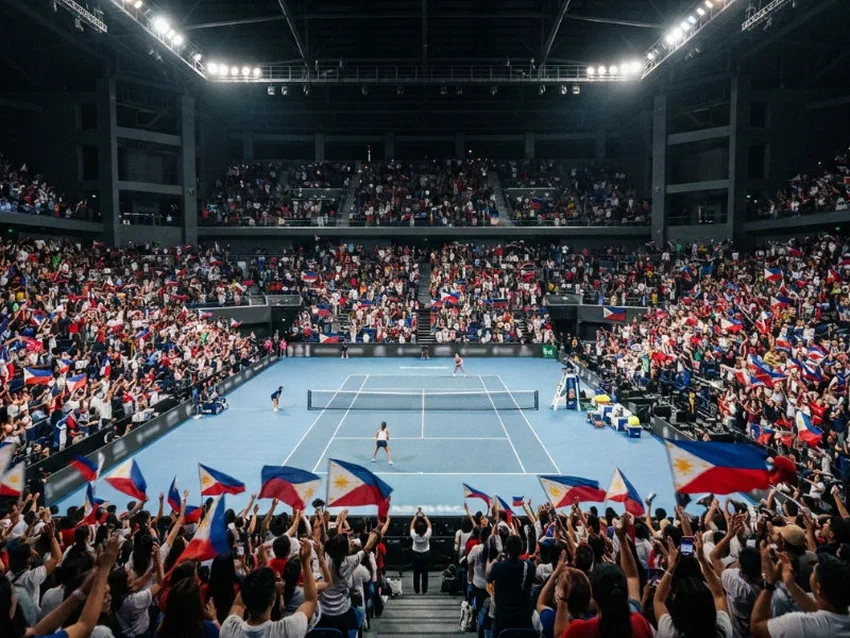
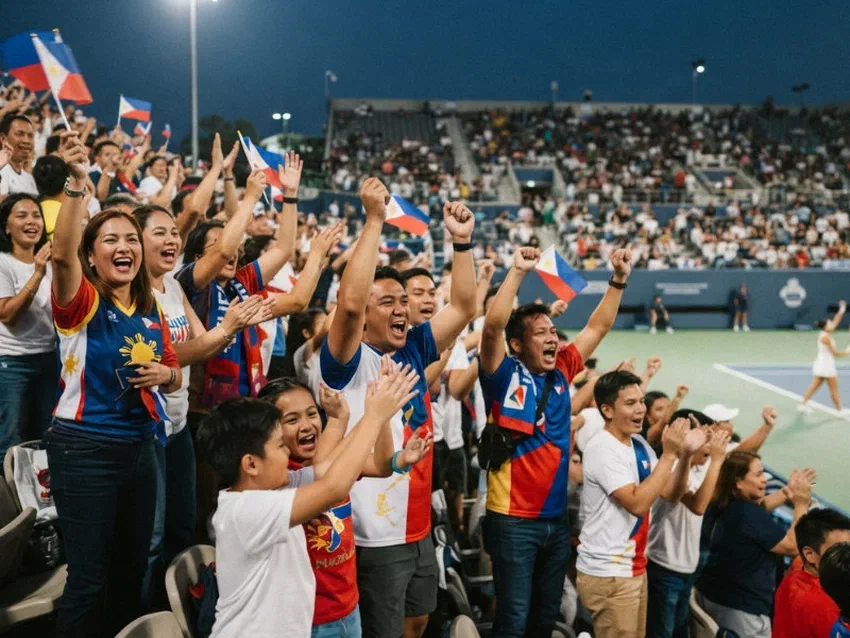
That passion already showed up early at the Australian Open 2026. First round of a Slam. Grand Slam Round 1 highlights clip. Alycia Parks vs Alexandra Eala. Not a quarterfinal. Still a loud Pinoy bay: flags, heat, the kind of support Alex rarely gets as the away player. Keep that.
I heard the growing pains later on a WTA Toronto Round 2 highlights clip. Same matchup, Parks vs Eala again. Alex avenged her Australian Open loss. The Pinoy section still sounded like someone cranked the volume on purpose. Early-round match, title-fight energy. Keep that too.
In that Toronto stretch, someone shouted “Go Alex” right as she was serving. Then the shushing wave. That shush isn’t hate. It’s the sport handing a first-timer the live rule - and protecting both players. Untimely noise doesn’t only land on the opponent. On Alex’s toss, it hits her too.
If we can bring final-night passion to a Slam first round and a midweek second round, we can learn the serve clock. And to the rest of the arena: be patient with new Pinoy fans. A lot of these seats are first-timers. They showed up loud for a Wednesday Round 2 because they love Alex. Pass the rule once. Don’t flatten a whole bay as only “noisy” because someone cheered on the toss.
Why Our Other Sports Train the Wrong Reflex
Gilas: roar through the free throw. Noise is defense. Volleyball nights - UAAP finals, PVL - the gym stays loud through the serve and the kill. Pacquiao: roar through the round. I mostly catch boxing as main-event highlights, not full cards, and even through a phone speaker the noise never waits for permission.
Tennis on serve is different. The server needs a quiet second to toss, load, and hit. So does the returner. A shout mid-toss isn’t loyalty. It’s a distraction for both players - and the umpire can pause the point for it.
Yell “Go Alex” once she’s already on the line to start her serve and you don’t help her. You break her rhythm. Yell while the opponent is on her line and you break that point too. Same heart. Different clock. The Gilas / volleyball / Pacquiao roar isn’t the problem. Parking it on the toss is.
I’m not a tennis player myself - pickleball or badminton in a small room when I pick up a racket. I’m usually a TV fan with a career tracker open during Slams. That Toronto serve shout still made me wince through the mic. If it punched through the broadcast, the players heard it louder in the arena.
The One Timing Rule
Stay quiet once the server is already on the line to start her serve - and stay quiet until the point is over.
Visual cue: either player walks to the baseline, ball in hand, set to bounce or toss - she’s on the line. Bay goes quiet. Until then, after a point dies, you can still yell. Not quiet forever. Quiet for the serve and the live point - for Alex and for the woman across the net.
If you only remember one line before you find your seat: cheer between points, not during them. Untimely noise hurts both sides of the court.
I almost wrote a longer list first. Then I rewatched that Toronto serve and realized most first-timers only need this one fix.
When to Roar, When to Shut Up
Tennis crowds aren’t libraries. They just have a pulse - closer to the gap between boxing rounds than to a full Gilas possession.
Clap when a point ends. Winner, error, ace - doesn’t matter who hit it. Clap when the opponent paints a line or sticks a volley. Clap when she double-faults too - point’s over, that reaction is allowed. Cheer after a game or set. Let it out when Alex wins a long rally.
In the Toronto clip, the Pinoy section clapped when the opponent double-faulted. Fine. Serve ritual already finished. Point belongs to Alex. What gets you shushed is noise during the toss, not applause after a second serve misses.
You’re there for Alex. You’re also there for tennis. Clapping a great shot doesn’t weaken the Pinoy section - it shows you can see the match, not only the passport.
Stay still once either player is on the line to start her serve. Stay quiet while the returner is set. Stay quiet while a point is live - even if the ball looks wide from your seat. Stay quiet while the umpire is talking.
Do not shout “out” from the stands. You’re not a line judge. Under the rules, crowd noise and spectator “out” calls are not treated as a hindrance - so the point usually stands as played. No automatic let. If Alex freezes, she can lose the point. Maybe she thought the crowd made a line call. Same for the opponent. Famous version: a fan yelled “Out” at Wimbledon in 2003, Greg Rusedski stopped, and the umpire gave Andy Roddick the point. Same rule on the WTA tour. You think you’re helping. You might hand the other side a free point.
Flags and short chants are fine between points. Continuous mid-point noise is not. Unsure? Watch the regulars for one game. Copy their silence, then copy their roar.
Before You Walk In
Quiet once she’s on the line to start her serve - no “Go Alex” on her toss, not on the opponent’s either. Yell after the point dies. Never call the lines. Phone on silent, screen dim. Don’t coach from the stands - she has a box. If you get shushed, stop. Don’t argue. Fix the timing.
And when the opponent hits something special - winner down the line, ridiculous get, big serve - clap. Cheer Alex harder after her points. Don’t boo good tennis just because it wasn’t hers. Courts notice. It reads as class, not betrayal.
The shushing in the stands is mostly new live fans learning in public. People love Alex the way we loved Pacquiao nights and volleyball finals. They haven’t been handed the serve rule yet. That’s not failure. That’s a young tennis crowd growing up. Learn the timing, clap the good stuff from either end, pass it to the person next to you.
Passionate - And Maturing
Alex doesn’t get a packed Manila center court for a Slam. Away live crowds will lean local. What Pinoy fans can control is the story that sticks: passionate people in the seats who respect the point. They also respect excellence when it comes from the other side of the net.
I want the tennis world to say: Filipinos bring heat. Even on a Slam first round. Even on a second-round Wednesday. They know when the court needs quiet. They clap a great shot even when it hurts.
Give the new Pinoy sections that runway. Correct the timing. Keep the welcome warm. A first wrong “Go Alex” on serve is a coaching moment, not a character review of a whole country.
It’s the soft home court we can actually build. It helps Alex. It helps the next kid who shows up with a flag.
Show up live. Stay passionate. Mature the timing. Appreciate the tennis. And if you’re watching from another section - be patient while we do.
Share