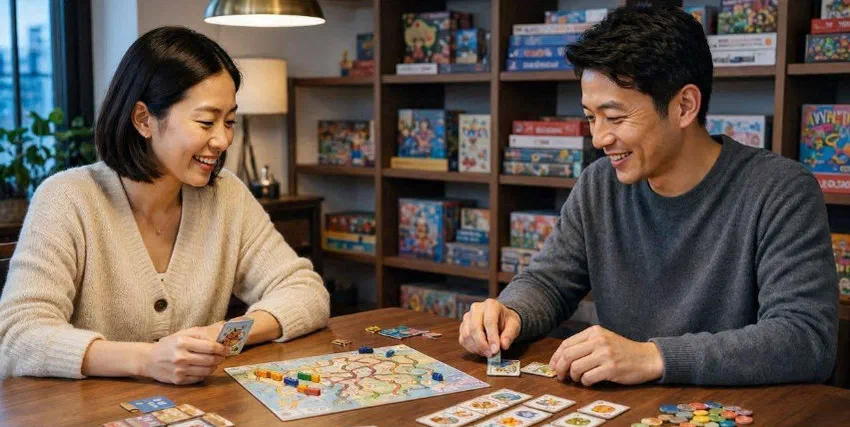
When someone says they don’t like board games, I usually know what they mean. They mean the aisle at the toy store - Monopoly, Scrabble, Boggle, the same boxes that have been there since we were kids. Glad I found the other shelf before I gave up on the whole idea.
That aisle never worked for me. I hated Monopoly because I never managed to finish a game - not once. Someone would quit. Or we’d call it at midnight. Or the trades would stall until nobody cared who won. Scrabble and Boggle are fine if you’re a walking dictionary. I’m not. Watching someone rack up obscure two-letter words isn’t my idea of fun.
Trivial Pursuit is the odd one out. I actually like the trivia. I’d play it again. I also know most of the table won’t. Either they don’t care about the categories or they’re tired of being the person who never lands on their wedge. Fair warning before you haul it out at a party.
Modern board games are usually the ones you don’t find in those mainstream toy stores. Hobby shop shelf, online order, a friend who already owns a copy. Different boxes, different designers, different assumptions about your evening.
Thirty Minutes, Maybe an Hour
My hard preference: a game should end in about thirty minutes. One hour is the worst I’ll tolerate if the table is still having fun. Anything longer and I start wondering if we picked wrong.
That’s partly Monopoly trauma. I never got the satisfaction of a finished game - just a long slow bleed until someone gave up. Modern designers put a real number on the box and mostly mean it. Hanamikoji plays in about fifteen minutes. Two players, seven geishas, four turns each, done. Teach it in five if you skip the flavor text and show one Gift split. Play twice, swap seats, still inside my window.
I’m not chasing the four-hour epic. I want something that starts fast, ends clean, and leaves room for one more round if everyone is still warm. That rhythm is why I keep reaching for card games and tight two-players. Not the shelf of “maybe someday when we have a free afternoon.”
Same Game, Half the Runtime
Some toy-store classics have a good idea buried under a bad runtime. I don’t want to banish Monopoly, Catan, or Ticket to Ride from my shelf forever. I just want versions that respect the thirty-minute rule.
Smaller maps, card decks instead of boards, win conditions you can actually reach before someone checks their phone. I keep them as appetizers: taste the franchise, see if the table wants the big box, move on if not.
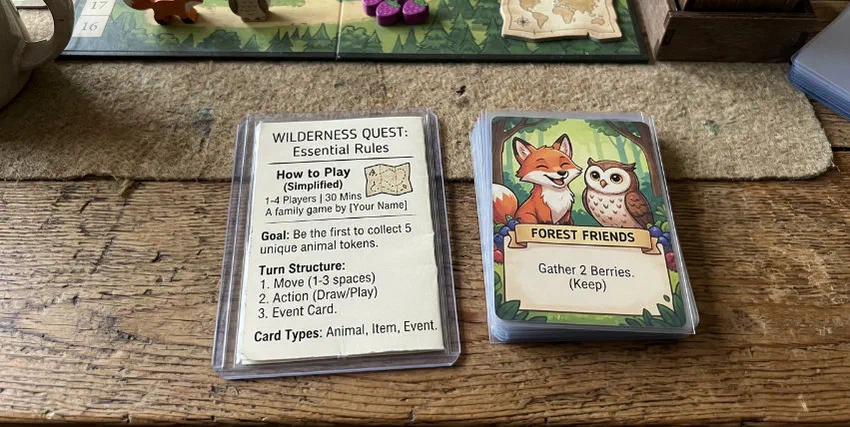
Monopoly Deal is the Monopoly I can actually finish - card game, three property sets to win, same rent-and-steal drama, fifteen minutes. The reference cards on the table do the teaching so I’m not reading rules out loud while everyone checks out.
Ticket to Ride: London and Ticket to Ride: New York do the same for route-building. Smaller map, fewer trains, same “did you just block my line” tension in about twenty minutes. If the table likes the short one, maybe we graduate to the continent-spanning box. If not, we still had a good night.
Catan: On the Road is the pocket Catan experience. Draw resources, build from a shared pool, trade with the bank or each other. First to seven victory points wins. No hex setup, no ninety-minute table hog. I wanted the build-and-trade feel without signing up for original Catan on a weeknight.
The Decisions Are the Fun Part
Toy-store classics often punish you for not already being good at the game. Scrabble rewards vocabulary you either have or you don’t. Boggle rewards speed-reading letter grids. Monopoly rewards whoever lasts longest at the table. None of that is a decision I get to make on my turn.
I even tried chess. I learned from Chessmaster, practiced openings, felt like I was getting somewhere. Then I sat down against someone who had played a lot but never bothered with theory - and lost in about twenty moves. The way they took my pieces wasn’t covered anywhere in my training. Everything I had studied meant nothing. I walked away feeling like I had wasted my time. I had learned a game where the gap between “I finished the tutorial” and “this person has played a thousand games” is a canyon. Chess is a great game. It’s not a great game for me.
Modern games put the interesting part in your hands.
Hanamikoji is my favorite example because the hook is so plain: I split, you choose. I fan out cards into piles. You pick the pile that hurts me most. Four turns per player, period. One Secret, one Trade-off, one Gift, one Competition. Each used once, then the round is over. Show one Gift split and a newcomer usually gets it. Two players, fifteen minutes, no vocabulary test.
Santorini is what I wanted chess to feel like - spatial, competitive, two players staring each other down - but simpler. Move, build, don’t set up the other person’s victory. The board looks serious enough that adults stop treating it like a kids’ game, and we’re done in twenty minutes with no opening theory.
I’m ready to say goodbye to roll a die and move spaces. That was Monopoly’s whole personality. Modern games let you choose what to do on your turn instead of watching a pawn obey a number you didn’t earn.
The Table Beats the Screen
I quit Marvel Snap after the meta treadmill ate my couch time. Three-minute matches turned into an hour of deck lists and cube anxiety. The game was slick. My brain was doing homework.
Board games don’t ping me. No daily login. No season pass. No shop tab reminding me what I’m missing. I pull a box off the shelf when someone is free, or I don’t.
The game waits in the box instead of demanding attention on my phone.
There’s friction too - setup, teaching, finding the right player count. I won’t pretend cardboard is always easier than tapping an icon. But the friction is honest. I chose to clear the table. I chose to explain the Gift action once. Nobody is A/B testing my session length in the background.
When a game night actually lands, I remember the room. Who groaned at a bad split. Who insisted we play one more round of something light because nobody wanted to go home yet. Marvel Snap gave me stats. Board games gave me that.
At Home
When I’m at my own table, I can spread out. Dice trays, big card boxes, blocks on a board - things that would never survive the travel pouch. This is what stays on the shelf.
Jaipur is my default when there are exactly two of us at home. Shared market, no stealing from each other’s hands, first to two Seals wins. I’ve lost the first round badly and still come back for the second - one bad hand doesn’t kill the whole night.
Santorini stays home because the blocks need room - same spatial two-player game from earlier, not pouch-shaped.
Dixit is what I haul out when the group is mixed - gamers and non-gamers, quiet people and loud ones. You give a clue, everyone throws in a card that could match, you guess. I’m bad at being clever on turn one. That’s never mattered. The paintings carry the game, and the box is too big to pack.
Las Vegas is my answer when someone says they only like dice games. You roll, pick one number, commit every die showing that number to the matching casino - one decision, not roll-and-move. Last time we played, three of us tied on casino four and nobody got paid. Brutal, fast, done in four rounds.
Century: Golem Edition (or Spice Road - same family) is what I pull once the table can handle a slightly longer teach. Splendor is fine. Everybody owns Splendor. Century replaced it for me because the upgrade path is easier to read - you watch someone’s engine get faster card by card.
Ohanami is the quiet one when we want a puzzle instead of a party. Pick two cards, pass the rest, build three ascending columns you can’t rearrange. The whole tension is “can I still fit this 47 somewhere” while the columns get tighter.
Deception: Murder in Hong Kong only comes out when the group will lean into the mystery. When it lands, you can misdirect without flat-out lying - the frame does half the bluffing work.
The small-box games from earlier - Monopoly Deal, Ticket to Ride: London and New York, Catan: On the Road - stay home too. They’re small, but I reach for them on weeknights when the full table is free, not when I’m borrowing someone else’s kitchen.
What I skip everywhere: games that need a forty-minute teach before anyone has fun. Games with so many components that setup eats the whole session. Games that confuse length with depth. Anything that blows past an hour without a good reason. And anything where the main action is roll, move, repeat.
On the Road
Not every game night is at my table. Sometimes we’re at someone else’s house, a hotel room, or a kitchen surface that wobbles when you lean on it. For that I keep a small zip pouch in my travel bag - same bag as the laptop charger and the extension cord. Card games only. Nothing that needs a twenty-minute setup. If it won’t lie flat next to the laptop, it stays on the shelf above.
Two players? Hanamikoji - four turns each, mostly cards, mean splits. Pia and I have played it on a small desk with no room to spread out.
Three or more? I start with Sushi Go! or Vegetable Stock, depending on the table. Skeptical cousins who have never touched a hobby game get Sushi Go! - one rule, simultaneous picks, cute art doing the teaching. People who already like a little market tension get Vegetable Stock. Draft veggies. Prices rise on what you leave behind until they crash. Tomato groans included.
Rainbow is the smallest box when we want something sharp and done before dessert.
Fluxx only comes out when the group can handle silly. Rules change on the table. Nobody pretends there’s a long-term plan.
Jungo is the shedding game for three or four when we’re tired of passing hands. It has survived a province trip in the back seat.
What I’m Saving for Davis
I look forward to when Davis gets older so I can teach him more of these. Right now the shelf is mostly mine. Pia will humor a short game. Friends will try the other games. But he’s not quite at “read the rulebook and sit still for thirty minutes” yet.
Strike is the exception. He and his grandmother play it already - chuck dice into the arena, match numbers to collect them, groan when you roll an X. No reading, no turn that drags while someone thinks. Last player with dice wins. Loud, fast, and I don’t have to sit in the chair explaining rules every round.
That’s fine for the rest of the shelf. I’m already picking boxes with a kid in mind. Strike and Sushi Go! before anything that makes you wait on turns. Santorini before chess. Century before Splendor. Ticket to Ride New York before the continent-spanning version. Games where the rules fit in one explanation. Nobody needs to already be good at games to have fun.
When he’s ready, I want him to learn on decisions, not dice. I want his first memories of board games to be building a route, bluffing badly on purpose, or groaning when someone picks the wrong pile. Not going bankrupt because he landed on Park Place. Monopoly Deal might be the first Monopoly he ever finishes.
If you’ve only ever met board games through the toy-store aisle, I get the skepticism. Look for a play-time number around thirty minutes on the box. Try Sushi Go!, Monopoly Deal, a small-map Ticket to Ride, or Dixit before you buy the big heavy thing. Teach it in ten. Play twice. If the table wants a third round and you’re still under an hour, you found the right one. Glad those are still the boxes I reach for.
Share